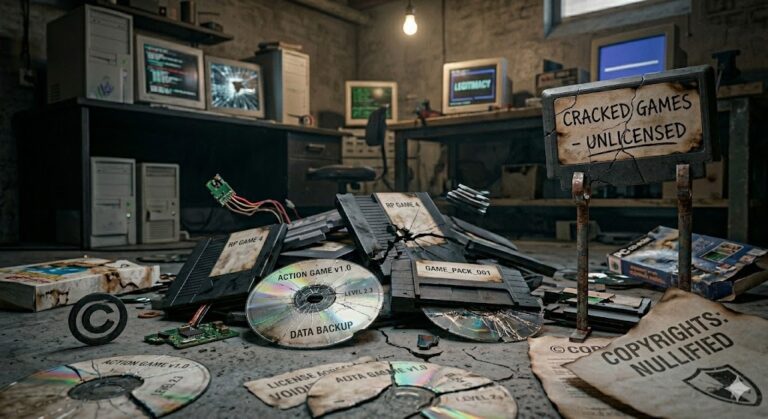
Cracked Games and the Hidden Ripple Effect
When most people hear “cracked games,” they picture a free download or a clever workaround. But cracked games aren’t free — they come at the expense of creativity, trust, and intellectual property. Beneath the surface, this underground ecosystem affects far more than lost game sales. It strikes at the heart of Brand Protection, IP Infringement, and Counterfeit Detection across the global entertainment and ecommerce landscape. Every unauthorized copy sets off a chain reaction that ripples well beyond the digital realm.
The Deeper Cost of “Free”
Take a familiar example: Grand Theft Auto V. Rockstar Games invested years of development, storytelling, and artistry into building a world millions love. When cracked versions circulate online, the loss isn’t just financial — it’s emotional and reputational. Those illegal copies often come bundled with malware, fake mod packs, or counterfeit DLCs that mimic official branding. Players who think they’re getting something for nothing often end up paying the price in corrupted data or compromised devices. The pirates who distribute these files aren’t just stealing games; they’re stealing brand equity. And once that trust breaks, rebuilding it is far harder than releasing a patch.
When Characters Become Collateral Damage | Cracked Games
A game’s intellectual property is more than just code. It’s the characters, music, stories, and artwork that form its identity. When cracked versions leak or counterfeit merchandise floods marketplaces, that IP becomes collateral damage. Cracked Pokémon ROMs or pirated Mario titles, for example, often lead to unlicensed merch — shirts, plush toys, or even NFTs — using beloved characters without consent. Each of these violations deepens IP Infringement and blurs public understanding of who truly owns those creations. Once that counterfeit ecosystem takes root, it doesn’t stay in gaming. It spills into streaming, esports, and ecommerce, where replica items and cloned products erode legitimate markets.
Beyond Games: The Counterfeit Domino Effect
Cracked games often act as gateways to a much larger counterfeit economy. Unsanctioned sellers use cracked content to attract followers, then shift into counterfeit merchandise, fake collectibles, or digital clones. That’s why Counterfeit Detection technology and Online Brand Protection tools are evolving in parallel. Brands today need more than takedowns; they need visibility across marketplaces, social channels, and even dark-web networks where digital and physical fakes intersect.
The Role of AI and IP Protection Strategies
Modern IP Protection Strategies now fuse human expertise with artificial intelligence. Machine learning systems can identify cloned artwork, pirated versions, or even AI-generated copies before they spread. AI trained on official brand data helps companies detect pattern similarities across thousands of listings — something manual monitoring could never handle. But technology alone isn’t enough. Real protection requires collaboration between developers, marketers, and legal teams who all understand IP as an evolving, living asset.

The Myth of “Free” and the Ethics of Access
Many who download cracked games don’t see themselves as criminals. Some are students or players in regions where prices feel out of reach. That doesn’t excuse piracy, but it helps explain it. The answer isn’t just enforcement — it’s accessibility. Studios that adopt flexible pricing or subscription-based access reduce the incentive for players to seek illegal copies. True brand protection blends empathy and innovation: fair pricing, transparency, and respect for community trust.
From Games to Global Brand Integrity
Cracked games are just the visible symptom of a deeper misconception — that digital content has no real ownership. But IP fuels entire creative economies. When piracy undermines that, it doesn’t only hurt developers; it weakens the infrastructure that supports artists, designers, voice actors, and storytellers worldwide. That’s why industries beyond gaming — from fashion to film — are now adopting the same tactics used by top studios: unified data systems, real-time counterfeit detection, and stronger IP education. In today’s digital landscape, Brand Protection isn’t merely a legal shield. It’s the backbone of creative survival.
Follow Axencis’s LinkedIn for more updates & news. Get a comprehensive brand scan now on Axencis
Learn more: Axencis | Linkedin | Substack | Twitter | Youtube | Instagram | Academia | Hackernoon | Blogger | Quora | DailyMotion | Pinterest | Facebook