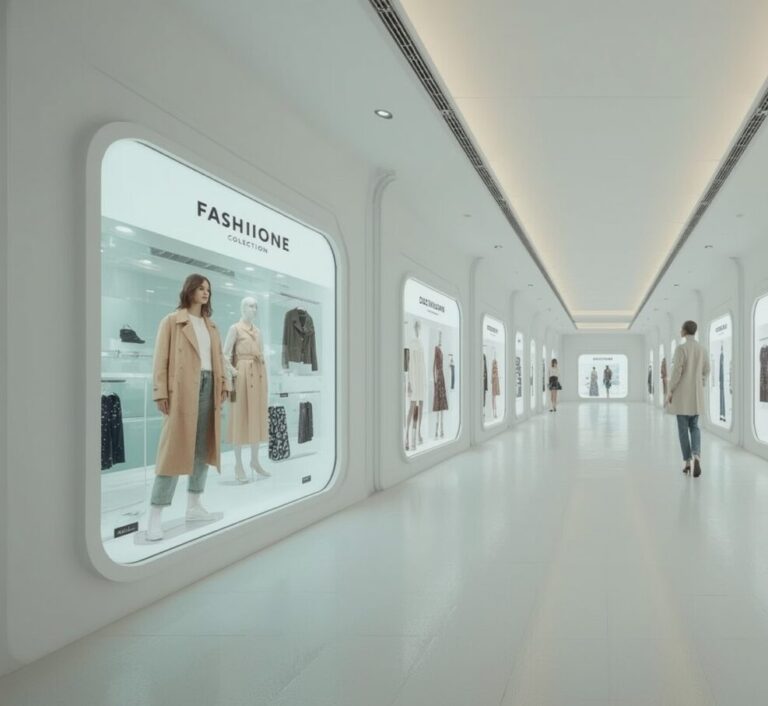
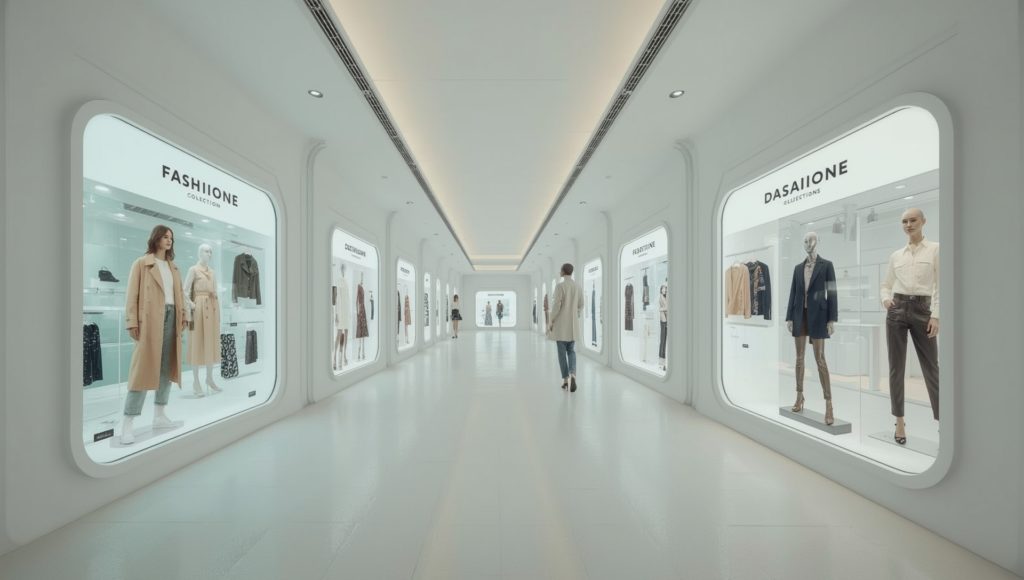
A Street Where Every Window is Alive – Digital storefronts
Picture this: you’re walking down a busy high street in New York, London, or Tokyo. Instead of traditional shop windows filled with mannequins, every storefront is a massive digital screen — alive, glowing, and interactive. its the futuristic Digital Storefronts.
Shoppers swipe through the latest collections, watch trending TikTok fashion edits play live on the façades, and instantly see how an outfit would look on them. High-tech sensors measure body dimensions to recommend perfect fits. With a simple tap, your order is placed — and the clothes are delivered to your home within 24 hours.
This isn’t science fiction. It’s the future of fashion retail — a world where the boundaries between physical streets and digital marketplaces like Amazon, eBay, Alibaba, Shein, ASOS, Zalando, Farfetch, Flipkart, Etsy, Poshmark, and StockX disappear.
Inspiration from Real-World Innovations
🛒 Tesco’s Virtual Grocery Stores
In Seoul, South Korea, Tesco pioneered virtual shopping walls in subway stations. Commuters scanned QR codes of groceries displayed on giant posters, and their orders were delivered later that day. It showed that shoppers were willing to browse and purchase from a “digital wall” in a public space.
🏬 Media Facades in Retail Architecture
Malls like Puerto Venecia in Spain have installed massive LED façades that turn architecture into immersive, living screens. Instead of static billboards, the building itself becomes a dynamic digital storyteller.
AR Mirrors and Smart Screens
Fashion retailers like Zara, Nike, and Ralph Lauren have introduced AR mirrors and touchscreen kiosks that let shoppers virtually try on clothes or browse extended catalogs in-store.
🛍️ Amazon Go & Automated Retail
With Amazon Go, physical checkout is removed entirely. You walk in, pick what you want, and leave — the transaction happens invisibly. It’s a glimpse into frictionless retail where physical and digital are seamlessly integrated.
Each of these examples chips away at the boundary between digital convenience and physical presence. The digital storefront street is the natural next step.
Why Digital Storefronts Are Inevitable
Space Efficiency
Traditional retail requires massive inventory and floor space. Digital storefronts need only a warehouse + delivery system, freeing up real estate.
Consumer Behavior Shift
Shoppers are already comfortable buying on Amazon, eBay, Alibaba, Shein, ASOS, Zalando, Flipkart, Farfetch, Etsy, StockX, Poshmark, and countless others. Bringing these platforms to the physical street is simply meeting consumers where they are.
Personalization at Scale
AI-driven screens could instantly customize the storefront feed based on who is standing in front of them — showing sustainable brands to eco-conscious shoppers, streetwear drops to Gen Z, or luxury collections to high-net-worth buyers.
Data-Driven Experience
Unlike mannequins, digital façades can test and measure what people engage with, giving marketplaces insights in real time.
Fighting Counterfeit Fashion: Digital vs. Physical Retail
Counterfeit clothing costs the fashion industry billions each year and damages consumer trust. Both physical retail stores and digital storefronts fight counterfeits, but in very different ways.
🏪 How Physical Stores Fight Counterfeits
Control via supply chain: Brands ship to authorized partners only.
Physical inspection: Staff and shoppers check logos, stitching, packaging.
Brand reputation: Consumers trust official branded stores.
⚠️ Limitations: counterfeit products can still sneak in through gray markets, human inspection isn’t foolproof, and supply chain transparency often ends at the store door.
🖥️ How Digital Storefronts Fight Counterfeits
Direct marketplace-to-consumer transactions: Connected to verified seller accounts on Amazon, ASOS, Zalando, Farfetch, Flipkart, StockX, Etsy, eBay Authenticity Guarantee.
Blockchain / authentication tech: Proof-of-authenticity badges displayed on screen before purchase.
Dynamic transparency: Buyers see seller info, warehouse source, and authenticity verification instantly.
No on-site inventory risk: Counterfeits can’t sneak into stockrooms because stock is shipped directly from controlled warehouses.
AI + Big Data: Marketplaces already scan for suspicious sellers, and these protections extend to the digital façade.
Who Owns the Digital Storefronts? Brands vs. Marketplaces vs. Hybrid
A big question is: who will actually run these futuristic storefronts? If brands own them, like Nike or Gucci, they gain full creative control and can deliver immersive storytelling — but it’s expensive and limited to their own collections. If marketplaces like Amazon, eBay, Alibaba, Zalando, or Farfetch own the façades, shoppers get massive variety and built-in anti-counterfeit systems, though brand personality may be diluted. The most likely model is a hybrid: marketplaces providing the infrastructure and logistics, while brands plug in with curated experiences. This collaboration combines authenticity, variety, and scalability, transforming shopping streets into dynamic, trustworthy marketplaces.
✅ Key Difference: Normal stores rely on physical trust, while digital storefronts rely on digital verification and real-time data. That makes counterfeits far harder to slip through.
Follow Axencis’s LinkedIn for more updates & news. Get a comprehensive brand scan now on Axencis
Learn more: Axencis | Linkedin | Substack | Twitter | Youtube | Instagram | Academia