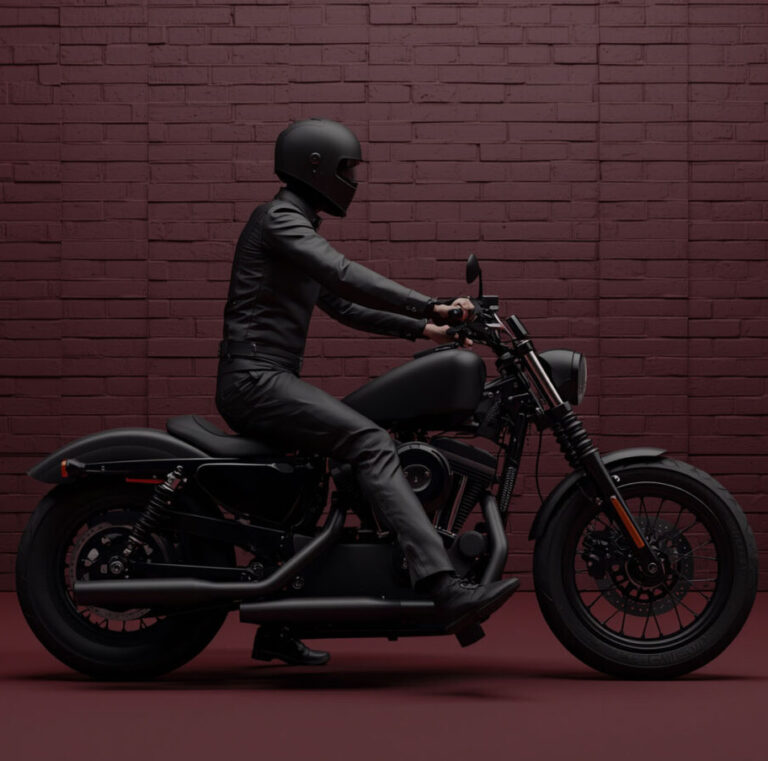
When most people think of the Hells Angels. The Hells Angels Logo they picture roaring Harley-Davidson motorcycles, black leather, and the iconic Hells Angels Logo featuring the winged Death Head. But beyond their rebellious image, the Hells Angels Motorcycle Club (HAMC) has built a reputation for being remarkably strategic in the world of trademark protection and brand enforcement.
From Outlaws to Trademark Owners | The Hells Angels Logo
Founded in California in 1948, the club now operates across 58 countries with more than 450 charters. The distinctive Hells Angels Logo & symbols — the Death Head, “81,” and the club’s Hells Angels colours (red letters on a white background) — have become instantly recognizable worldwide.
Far from being just patches on a leather vest, these marks are treated as prized intellectual property. The Hells Angels MC logo is registered under international trademark law, and the Hells Angels Motorcycle Corporation (HAMC) was set up specifically to protect these rights. Every member knows the rule: the patch belongs to the club, not the individual.
Trademark Battles on the Open Road
The Hells Angels have fought — and won — trademark battles against some of the biggest names in entertainment and retail.
Marvel Comics was forced to change its “Hell’s Angel” title to Dark Angel after a lawsuit.
Disney removed all references to the Hells Angels in its film Wild Hogs.
Alexander McQueen, Saks Fifth Avenue, and Zappos pulled merchandise featuring a skull logo too close to the Hells Angels symbol.
Amazon and Redbubble have both faced legal action for selling unauthorized t-shirts and merchandise.
These cases underline a powerful truth: the Hells Angels protect their marks as fiercely in courtrooms as they do on the streets.
Loyalties, Not Royalties | The Hells Angels Logo
The club’s mantra, “Loyalties not royalties,” reflects its strict licensing rules. Unlike mainstream brands, HAMC does not sell rights to its trademarks. The Hells Angels logo and related insignia are licensed only to charters and full-patch members. Counterfeit patches or misuse of Hells Angels colours are seen as not just trademark infringement, but an insult to the club’s identity.
Yet, the group also commercializes selectively. “Support 81” merchandise — from t-shirts and beanies to cigars and keychains — is sold officially through club websites and events, creating a legitimate revenue stream while reinforcing brand loyalty.
From Violence to Legal Precision
In the past, counterfeiters risked more than cease-and-desist letters — they risked physical retaliation. But today, HAMC relies heavily on trademark protection litigation. Led by flamboyant IP lawyer Fritz Clapp, the Angels use federal courts and media coverage as part of their enforcement strategy. Each lawsuit sends a message: the Hells Angels mc logo and related IP are not up for grabs.
Lessons for Brand Protection | The Hells Angels Logo
The Hells Angels’ approach might seem paradoxical: a group classified by law enforcement as an outlaw motorcycle gang is also a model of brand protection discipline. But the lesson for businesses is clear:
Strong trademark registrations matter.
Enforcing against infringers consistently — even global giants — builds deterrence.
Protecting logos, colours, and symbols is just as vital as protecting product designs.
Whether you admire their methods or not, the Angels prove that even a rebellious brand image relies on structured IP enforcement to maintain its value.
Follow Axencis’s LinkedIn for more updates & news. Get a comprehensive brand scan now on Axencis
Learn more: Axencis | Linkedin | Substack | Twitter | Youtube | Instagram | Academia