Brand Protection for Perfume and Fragrance Brands
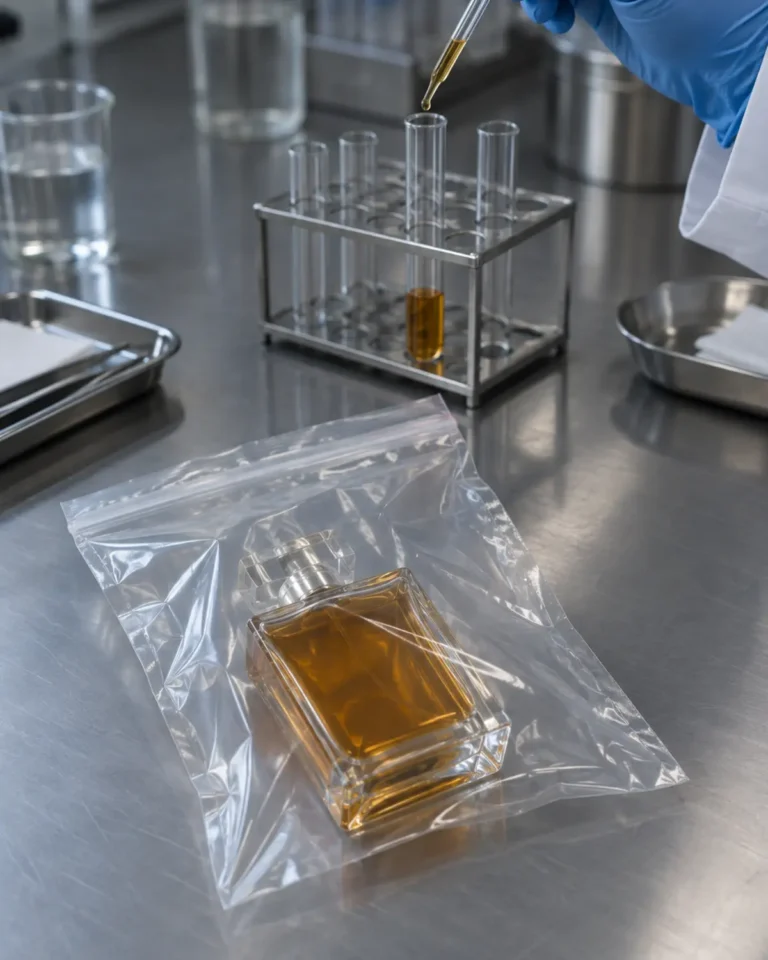
A woman in New York sprayed what she thought was designer cologne onto her body. Within hours, her skin broke out in blisters. Lab tests revealed this to be caused by toxic chemical poisoning. How did this happen? The bottle was counterfeit.
This isn’t an isolated incident. It’s what happens when counterfeit fragrances enter the market unchecked. And it’s why fragrance brands need to think about counterfeiting not just as revenue loss, but as a consumer safety crisis.
Annual counterfeit goods sold globally
Every takedown reviewed by a person
Counterfeit perfumes and cosmetics seized in the EU in 2024
Costs recovered from infringers, not a flat retainer
Last updated: September 2026
By: Alex Zaika, Axencis
What is the real cost of counterfeit perfumes?
Most fragrance brands treat counterfeiting as a business problem: revenue loss, brand damage, market share theft. But there’s something else happening that’s more urgent.
Counterfeit fragrances can contain hazardous ingredients that would not meet the safety and quality controls applied to genuine products. The FBI has reported counterfeit perfumes containing substances including arsenic, beryllium, and cadmium. Other counterfeit fragrances have been found to contain DEHP and even urine. New York State health authorities have also reported dangerous levels of bacteria, lead, and beryllium in counterfeit cosmetics. These substances and contaminants can pose serious health risks to consumers.
Different contaminants create different health risks in counterfeit fragrances. Heavy metals like lead can accumulate in the body over time, causing neurological damage or organ failure. Toxic solvents like methanol can trigger severe dermatitis, asthma attacks, and respiratory problems. Counterfeit beauty products have been found to contain harmful bacteria, which highlights broader safety risks associated with products manufactured without proper quality control. The synthetic allergens and phthalates in fake fragrances can disrupt hormonal systems and trigger allergic reactions.
Counterfeiting is more than just theft. Counterfeiters use this method to sell dangerous products that look like trusted products. And every counterfeit that remains on the market puts another consumer at risk. Fragrances are a smaller slice of that volume, but they’re pervasive and dangerous. Most counterfeits never reach customs anyway – online, the problem is worse.
How common is counterfeit fragrance?
The scale is alarming. The latest report, published in 2025 by the Organization for Economic Cooperation and Development (OECD) and the European Union Intellectual Property Office (EUIPO), notes cosmetics among the counterfeit product categories that pose serious health and safety risks. Perfumes and cosmetics also rank among the product categories with the highest propensity for counterfeiting, according to the report’s trade-related counterfeiting index.
In 2024, EU authorities seized a record 112 million counterfeit items worth €3.8 billion. Perfumes and cosmetics accounted for roughly 3% of that haul – about 3.3 million items seized in one year alone. But these are the ones law enforcement caught. Most fakes never reach customs. Most slip through to online marketplaces.
Recent busts show the organized nature of the problem. In early 2026, Spanish and French authorities dismantled a counterfeit perfume cartel, seizing 1.2 million fake bottles with a retail value around €94 million. German customs raided warehouses in late 2025 and early 2026, confiscating 21,500 and 34,000 fake perfume bottles respectively. A single shipment intercepted at Port Everglades in April 2026 contained fakes that would have been worth $1 million if genuine (Gucci, Armani, Lancome, and others).
The Miami and Tampa regions alone saw $1.7 billion in counterfeit seizures in the past year, and these are just the shipments that got caught at the border. Online, the problem is worse. Industry reports suggest brands lose up to 20% of potential revenue to fake listings on some platforms. Counterfeit rates are typically higher on e-commerce channels than in physical retail because detection lags further behind.
Any major luxury scent can be replicated cheaply overseas and sold through online marketplaces, social commerce, or unregulated channels. The economics are simple: a counterfeit that costs $2 to manufacture can sell for $40-$80, and the barrier to entry is low. Counterfeiters know they’ll get some percentage of sales through before platforms catch them, so the risk is worthwhile.
Where do counterfeit fragrances hide online?
Fragrance brands lose visibility across multiple channels. Counterfeits appear on mainstream e-commerce (Amazon, eBay), but also on social platforms (Instagram, TikTok), luxury resale sites, unauthorized international marketplaces, and increasingly through private sellers and messaging apps.
The problem is speed. A counterfeit listing can generate hundreds of sales before a brand even knows it exists. On social commerce platforms like TikTok Shop, livestreamers sell fakes in real time to engaged audiences. The listing is gone and the sale made by the time enforcement teams catch up. On Instagram, fake perfume ads use celebrity impersonation and deepfake tactics to build false trust. By the time the ad is flagged, it’s already driven traffic to unauthorized sellers.
On traditional marketplaces, fakes hide through multiple tactics: using authorized brand names but selling from unauthorized accounts, offering “dupes” or “inspired by” products, and using bulk seller accounts that disappear and reappear under different names. Sellers know that legitimate resale is hard to distinguish from counterfeiting at first glance, so they take advantage of this.
The result is that most fragrance brands have limited visibility into where counterfeits of their products are being sold. Many don’t know the extent of the problem until they run a systematic search or receive customer complaints about harmful reactions, by which point the damage has already been done.
How can fragrance brands detect counterfeits?
Detection requires a combination of automated scanning and human judgment. No single tool can catch everything, but a layered approach works best.
Marketplace monitoring is the baseline. Regularly search for your brand name across Amazon, eBay, Alibaba, and other platforms. Look for unusually low prices (if a luxury scent is listed at 50% below retail, it’s likely fake). Check for off-brand packaging descriptions or sellers with no authorization history. Use image search tools or specialized monitoring platforms to find duplicate product photos across multiple listings. Many fakes use the same photography across multiple accounts.
Watch for keyword flags. Words like “replica,” “dupe,” “inspired by,” or “unboxed” often signal counterfeits. Sellers sometimes use these terms to make fakes sound more legitimate than they are. Look also for listings that avoid mentioning the brand name directly but describe it vaguely (“luxury designer fragrance,” “premium scent”) – these are suspicious.
Social media requires separate surveillance. Check Instagram, TikTok, and Facebook where counterfeiters advertise more openly. Meta provides a Brand Rights Protection service where trademark owners can upload their marks and run scans for infringements. Look for suspicious accounts with new followers but high engagement, seller accounts without verifiable history, or ads using celebrity endorsements that seem off (deepfakes are common here).
Implement product authentication on your end. Apply unique QR codes or NFC tags to perfume bottles so customers can verify authenticity by scanning. Some brands use microscopic security markings, holograms, or digital fingerprints on packaging.
These measures can then form part of a broader marketplace authentication strategy. With Axencis’ UnitySync, verified sellers can use unique QR codes and branded marketplace listings to signal authenticity to customers, while brands gain greater visibility into their reseller network, monitor unauthorized sellers, and collect marketplace insights. This creates a clearer distinction between trusted sellers and potentially counterfeit or unauthorized listings.
Know your supply chain. If you discover an unauthorized seller, investigate where they got their stock. Products shipped from countries known for counterfeiting (often undeclared from Asia) should be scrutinized. Require authorized dealers to prove supply chain integrity through invoices and manufacturer authorization. Track unusual distribution patterns – if a new seller suddenly appears with large inventory, verify the source.
Educate customers. Provide clear guidance on packaging features, batch codes, and where to buy authentically. Encourage official channel purchases only. Some brands partner with influencers for “authentic unboxing” content to highlight what genuine products should look like.
The key is continuous surveillance. No single detection method works perfectly, but combining automated scanning with human review catches most fakes before they cause widespread damage. When you find a counterfeit listing, use the platform’s official report tools (Amazon’s Brand Registry, Instagram’s counterfeiting form, eBay’s IP submission) to initiate removal.
Which enforcement strategies work for fragrance brands?
Detection is only half the battle. Enforcement requires a coordinated approach across multiple channels.
Record your trademarks with customs. In the US, EU, and across Asia, customs agencies can block imports of goods suspected to infringe recorded IP rights. When customs intercepts a counterfeit shipment (like the $1 million Port Everglades case), having your marks on file ensures products are seized rather than released. This is preventive enforcement – stopping fakes before they enter the market.
Use online takedown services. Work with e-commerce platforms to remove fakes quickly. Amazon’s Brand Registry and Project Zero allow rights-holders to remove listings directly without waiting for platform review. Meta’s Brand Rights Protection portal lets brands issue takedowns on Instagram and Facebook. Report infringing items on eBay, Depop, Vestiaire Collective, and other resale platforms. Time is of the essence here because a delay of even a few hours can allow a counterfeit listing to sell hundreds of units. Human-verified takedowns keep that speed without hitting legitimate resellers.
Cooperate with law enforcement. When the issue escalates to large-scale counterfeiting (millions of units, organized crime connections), involve police or IP task forces. National IPR centers and Europol units prioritize cases that cross borders. The Spanish and French collaboration on the Catalonia perfume factory, and German customs coordinated raids, show what’s possible when brands share intelligence with authorities. Joint operations lead to arrests, destruction of fake stock, and deterrent effects on future counterfeiters.
Invest in advanced authentication technology. Holograms, serialized QR codes, NFC tags, and hidden markers make counterfeiting harder. When consumers or customs scan these, they confirm authenticity or flag fakes. Counterfeiters constantly try to replicate these security features, but staying ahead with ISO-certified in-lab methods and evolving technologies keeps the bar high enough that most won’t try.
Pursue legal action when warranted. For organized counterfeiting operations, civil lawsuits targeting multiple defendants simultaneously can freeze seller accounts, seize accumulated funds, and recover actual damages.
Schedule A cases are particularly effective because they use ex parte temporary restraining orders (TROs) to shut down operations across multiple platforms and payment processors simultaneously, halting sales and recovering money that counterfeiters have already made. In some countries, large-scale trafficking of counterfeit goods carries criminal penalties, such as 5-10 years of imprisonment in EU/US jurisdictions for willful counterfeiting. Publicizing criminal cases against perfume counterfeiters (with the help of customs press releases) raises awareness and discourages potential counterfeiters.
For brands dealing with persistent networks or high-volume counterfeiting, legal enforcement can often recover more revenue than takedowns alone, which rely on the potential redirection of illegitimate sales to legitimate channels to generate financial returns. Axencis works with fragrance brands to coordinate platform enforcement and legal escalation. This ensures that legal action targets the actual operators, not just individual listings.
Build consumer awareness. Inform customers about the dangers of fakes. When consumers understand that counterfeit fragrances contain toxic chemicals and pose health risks, they become part of your enforcement system. They report suspicious products, avoid unauthorized sellers, and pressure platforms to act faster. Public health alerts further amplify this effect.
Join industry coalitions. Work with other luxury and cosmetics brands on anti-counterfeiting efforts. Shared intelligence on counterfeiting trends and seizures helps everyone respond faster. EUIPO and OECD reports guide where to focus efforts based on where counterfeits are most active.
These strategies work best together. A fragrance brand relying only on takedowns will see counterfeits reappear constantly. A brand combining customs recordation, platform enforcement, authentication technology, law enforcement cooperation, and consumer education creates real friction that counterfeiters can’t easily overcome.
Why does fragrance counterfeiting matter beyond revenue?
As German customs officials note, “unknown ingredients in perfumes pose a significant risk. Combating counterfeiting is an active form of consumer protection.”
Fragrance brands shouldn’t think about counterfeiting as just a business problem. It’s a health and safety issue. Every counterfeit that stays on the market longer than necessary is a risk to consumers who trust the brand name on the bottle.
For fragrance brands, peak purchasing periods are predictable. Thanksgiving, Christmas, New Year’s, and Valentine’s Day create annual spikes in both legitimate and counterfeit demand. Systematic monitoring, fast enforcement, and customer education during these windows can prevent significant harm and revenue loss.
Brands that treat counterfeiting with the same rigor as quality control and sustainability are protecting both their business and their customers.
Key takeaways
- Counterfeit fragrance is a consumer safety problem, not just lost revenue. Fakes have been found containing arsenic, beryllium, cadmium, lead, and bacteria.
- Seizures show only part of the problem. EU authorities seized about 3.3 million counterfeit perfumes and cosmetics in 2024, and most fakes never reach customs.
- Online channels move faster than enforcement. A listing or livestream can sell hundreds of units before a brand knows it exists.
- Detection needs layers. Marketplace monitoring, keyword flags, social surveillance, and supply chain checks, backed by human review.
- Enforcement works best combined. Customs recordation, platform takedowns, law enforcement cooperation, and Schedule A / TRO actions against organized networks.
Frequently asked questions
How common are counterfeit perfumes and fragrances?
Very common. In 2024, EU authorities seized 3.3 million counterfeit cosmetics and perfumes – about 3% of all seized counterfeits that year. Recent major busts include 1.2 million fake bottles seized in Spain and France (worth €94 million), and a $1 million shipment intercepted at Port Everglades. Industry reports suggest brands lose up to 20% of revenue to fake listings on some platforms. The real number is likely higher because most fakes never get caught.
What are the health risks of counterfeit cosmetics?
Counterfeit fragrances often contain toxic chemicals including arsenic, beryllium, cadmium, lead, and mercury. They’ve been found laced with DEHP (a carcinogen), industrial methanol, and bacterial contamination (E. coli, Staphylococcus). These cause acute reactions (skin burns, blisters, infections) and chronic issues (respiratory problems, neurological damage, organ failure, hormone disruption). The FBI and New York State health officials have both issued public warnings about the dangers of counterfeit beauty products.
How can fragrance brands detect counterfeits online?
Use a combination of marketplace monitoring (search major platforms for your brand, watch for unusually low prices or suspicious sellers), image search tools to find duplicate listings, social media surveillance (Instagram, TikTok, Facebook), keyword scanning for terms like “replica” or “dupe,” and supply chain verification (know where authorized inventory comes from). Implement product authentication like QR codes or NFC tags on bottles. No single method catches everything, but layering approaches works well.
What enforcement strategies work best for beauty brands?
Multi-layered approach: record trademarks with customs (preventive enforcement at borders), use online takedown services (Amazon Brand Registry, Meta Brand Rights Protection), cooperate with law enforcement for large-scale operations, invest in advanced authentication technology, pursue legal action when appropriate, educate consumers about health risks, and join industry anti-counterfeiting coalitions. The brands that combine these approaches see better results than those relying only on takedowns.
Next steps
If you’re a fragrance brand, start by auditing your online presence. Search your brand name and signature scents across major platforms and social media to look for counterfeit listings you didn’t know existed. Once you understand the scope of the problem, get your trademarks recorded with customs and register with platform Brand Rights Protection programs.
For fragrance brands dealing with organized counterfeiting networks, legal enforcement may be necessary. Our article on luxury brand counterfeiting at scale covers the legal strategies (Schedule A cases, asset recovery, network dismantling) that work when takedowns alone aren’t enough.
Sources
- OECD-EUIPO – Mapping Global Trade in Fakes (2025)
- European Commission – EU enforcement of intellectual property rights at the border (2024 results)
- FBI – public warnings on counterfeit beauty products
- New York State health authorities – counterfeit cosmetics advisories
- German customs (Zoll) – counterfeit perfume seizure announcements
- U.S. Customs and Border Protection – Port Everglades seizure (April 2026)
Questions About Protecting Your Fragrance Brand?
Axencis works with fragrance, cosmetics, and luxury brands using automated detection, human-verified takedowns, and legal action to stop counterfeits before they reach consumers.
About the author
Alex Zaika writes on brand protection, counterfeit enforcement, and marketplace risk for Axencis, a brand protection and IP enforcement company. For questions about enforcement strategy, get in touch.