The True Cost of Counterfeiting: Beyond Revenue Loss
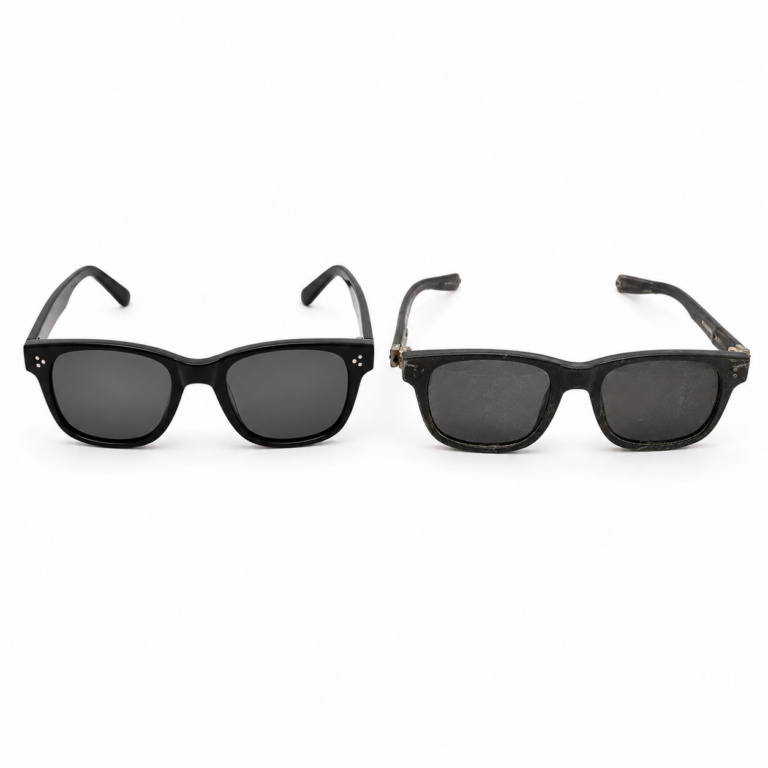
A single counterfeit sale that costs you $50 in direct revenue can cost your brand thousands of dollars once the hidden expenses are counted. Most brands know counterfeiting costs them money. They underestimate how much, and they almost always underestimate what form the cost takes. The common assumption is that counterfeiting is a revenue problem: you lose a sale to a fake product, and the financial loss is the price of that product. The real story is far more complex.
Annual counterfeit goods sold globally
Every takedown reviewed by a person
Of shoppers deceived into buying fakes in a year (2023)
Costs covered by recovered assets
Last updated: June 2026
By: Alex Zaika, Axencis
Counterfeiting creates a layered cost structure that extends far beyond the direct loss of that single sale. It creates burdens on customer support channels, erodes trust, distorts pricing across your entire category, and triggers regulatory investigations and compliance requirements. It creates safety incidents and liability exposure, and it forces you to invest in enforcement measures across increasingly fragmented online channels where counterfeiters have structural advantages.
When you add up all those costs, a single counterfeit sale that might be worth $50 in direct revenue loss can cost your brand thousands of dollars in hidden expenses. This article examines the true cost of counterfeiting, where the real financial pressure comes from, and why proactive enforcement is not a luxury but a business requirement.
The scale of the problem: beyond the headlines
The global counterfeit market is enormous. The OECD, summarized by Investopedia, estimates that counterfeit and pirated goods represented about $464 billion in world trade in 2019, or roughly 2.5% of global trade. Although this figure is already staggering, it is actually a conservative estimate. It focuses narrowly on goods trade and fails to capture every online sale, every support cost, or every indirect business effect.
Category-specific losses tell a more vivid story. Reuters reported that counterfeit branded clothing alone cost companies in France an estimated 1.7 billion euros per year on average in lost sales between 2018 and 2021. That is just one product class, in one country. When you extrapolate across global categories and regions, the picture becomes clearer: counterfeiting is not a niche problem affecting luxury goods. It is a mainstream problem affecting product categories that form part of everyday family life.
The nature of online environments has made counterfeiting harder to control. The EU processes about 4.6 billion parcels per year, roughly 12 million per day, with 91% originating from China. That volume creates structural advantages for counterfeiters: the sheer scale of parcels makes customs inspection difficult, the price model favors low-value items that are hard to police, and the geography lets counterfeiters operate across multiple jurisdictions with minimal accountability. Amazon identified and seized 7 million counterfeit products globally in 2023. That is a massive enforcement effort. It is also an indication of how pervasive the problem has become.
The hidden costs: what doesn’t appear on financial reports
The direct revenue loss is only the beginning. The hidden costs are often larger and almost always underestimated because they do not appear as discrete line items in finance dashboards.
Customer support burden
Birkenstock’s CEO described what this looks like in practice. The company received a flood of complaints from customers saying their shoes were defective or counterfeit. When customer service asked where they bought them, the answer was often a major online marketplace. Now Birkenstock’s support team is fielding complaints about products they did not make, from sellers they did not authorize, through a marketplace they cannot fully control. That support volume is real. It consumes real labor hours, damages customer relationships, and typically does not appear as a cost line tied to counterfeiting.
Think about what this means for your organization. Every customer complaint about a counterfeit product is a support ticket. Every support ticket requires investigation, documentation, and response. If you have 100 counterfeit complaints per month, that is potentially hundreds of hours of support labor annually. At $50 per hour in fully loaded cost, that’s roughly $60,000 annually in support labor alone. But it usually gets buried in “customer support cost” rather than tracked as a counterfeiting expense.
Pricing and margin distortion
Counterfeiters do not need to preserve long-term brand equity. They can undercut pricing aggressively because they have no future to protect. The problem is that this trains customers to expect lower prices. When your brand is competing against counterfeiters in the same search results, customers see lower prices and start to question whether your products are worth the premium. That pricing pressure can persist even after counterfeiters are removed, because customer expectations have already shifted.
Reuters’ reporting on counterfeit fashion losses in France shows this is not theoretical. Legitimate companies are losing real sales in categories where fake goods are widely available, because customers have been conditioned by low counterfeit prices to expect lower margins across the entire category.
Enforcement and compliance overhead
Ahead of Super Bowl LIX, U.S. authorities seized $39.5 million in fake sports merchandise. Reuters reported that the long-running “Operation Team Player” has seized more than $455 million in fake sports gear since 2013. That massive seizure effort comes from somewhere. It comes from government resources, law enforcement coordination, and investigative work. But brands themselves also bear enforcement costs: monitoring, takedown submissions, legal coordination, case documentation, and investigation. Done well, that is what structured IP enforcement looks like.
Those costs are not optional. They are the price of operating in an environment where counterfeiting is prevalent, and they grow with the scale of counterfeiting activity.
Regulatory and channel instability
EU regulators have moved toward holding platforms responsible for unsafe or illegal goods. Under the Digital Services Act, confirmed violations can expose a platform to fines of up to 6% of global annual turnover. Even when your brand is not the fined party, the regulatory environment becomes more expensive and more tightly policed. Compliance requirements increase, takedown processes become more formal, and the cost of selling and brand stewardship online rises across the board.
That regulatory pressure is not new. It is accelerating, and it means brands can no longer treat counterfeiting as a legal issue to handle when it becomes visible. It is increasingly an operational and compliance issue that requires proactive management.
| Hidden cost | Where it lands | Why brands underestimate it |
|---|---|---|
| Customer support burden | Support tickets, labor hours, refunds | Buried in “support cost,” not tagged to counterfeiting (~$60K/yr at 100 complaints/month) |
| Pricing and margin pressure | Category price expectations | Persists even after the fakes are removed |
| Enforcement and compliance | Monitoring, takedowns, legal coordination | Grows with volume; DSA fines reach 6% of global turnover |
| Reputation and reviews | Product ratings, conversion rate | Genuine product inherits the counterfeit’s complaints |
| Safety liability | Lawsuits, recalls, media coverage | One incident can dwarf the entire price difference |
Read the table top to bottom and the pattern is hard to miss. The cost a brand can see on a finance dashboard, the lost sale, is usually the smallest line. The ones that matter most are the ones nobody has assigned an owner to.
How counterfeiting damages brand reputation and trust
The most insidious cost of counterfeiting is the damage it does to brand perception. When a customer buys a counterfeit product and has a bad experience, they often blame your brand first and investigate the seller second. Birkenstock’s experience shows this clearly: customers reported bad shoes to Birkenstock, not to the unknown seller. The brand absorbed the reputation damage for a product it did not make.
This matters because reviews matter. Research on marketplace data shows that online reviews materially affect consumer decisions and firm economic outcomes. When counterfeit products generate complaints and low ratings, those reviews become part of your product’s visible marketplace identity. A product that should have 4.8 stars shows up with 3.2 stars because counterfeit versions are being reviewed alongside genuine products. That visibility problem becomes a conversion problem. Customers see low ratings and buy elsewhere.
The trust erosion is even deeper when you consider that customers often do not realize they have been deceived. Barron’s reported a 2023 Michigan State survey in which more than two-thirds of respondents said they had been deceived into buying counterfeits in the prior year. Think about what that means: two-thirds of consumers unknowingly bought fake products. They may not know they have a counterfeit, but they know they had a bad experience, and they associate that bad experience with your brand.
Why counterfeiting is a safety issue, not just a legal one
The costs extend beyond revenue and reputation into territory that most brands do not initially consider: safety. And safety risk is where counterfeiting becomes not just a business problem but a public health problem.
Consider what the U.S. National Highway Traffic Safety Administration discovered: three deaths and two serious injuries linked to faulty low-cost replacement air-bag inflators. The suspect parts were often bought online, sold at prices far below genuine equipment, and installed outside reputable repair channels. Someone went to buy what they thought was a replacement part for their car. They saved $20 or $30 by buying online, and died in a car accident because the counterfeit air-bag inflator failed to deploy.
That is not a theoretical risk or an isolated incident. It is an example of counterfeiting turning a sourcing failure into a fatality risk, and it matters not just for the person who dies. It matters for your brand because when this happens, you become the target of the lawsuit, the focus of the regulatory investigation, and the subject of the media narrative. National outlets run headlines like “Counterfeit [Brand Name] Air-Bag Inflators Linked to Deaths.” The story spreads across social media, and your brand becomes synonymous with the incident. The liability exposure extends far beyond the $30 price difference.
The problem extends across categories because counterfeiters face no quality controls and no long-term accountability. Apple identified counterfeit chargers that were poorly constructed, had missing components, lacked insulation, and posed fire risks. When a customer’s phone catches fire because they bought a counterfeit charger, they blame Apple, not the unknown seller. The safety incident becomes your brand incident.
The Times reported on a Which? investigation that found 23 of 34 cosmetics bought from major online marketplaces were likely counterfeit. Those counterfeit cosmetics can contain toxic substances. A customer applies them to their face, thinking they are buying a trusted brand. The chemicals absorb into their skin. And if something goes wrong, they report it to your brand, not to the counterfeit seller.
The pattern extends to children’s products, where Europol seized more than 8 million fake and harmful toys in 2025. Choking hazards. Fire risks. Chemical exposure. These are everyday items that families buy for children, often without realizing they are counterfeit. When a child is harmed, your brand faces the liability, investigation, and reputational damage.
Even pharmaceuticals have become a counterfeiting target. The World Health Organization issued alerts about falsified semaglutide products. Interpol coordinated an operation across 90 countries that seized 6.42 million doses of unapproved and counterfeit pharmaceuticals. A counterfeit diabetes medication might contain the wrong active ingredient, no active ingredient, or harmful substances. A patient takes it to treat their condition, none the wiser, and the outcome can be life-changing, if not fatal. The cost in human health is immeasurable.
What these examples share is a common pattern: counterfeiting creates safety risks that scale across your entire customer base, and your brand absorbs the liability and reputational damage. Safety is not a niche concern. It is a structural risk inherent in counterfeiting.
The business case: why proactive enforcement matters
When you add up the costs, the total is far larger than most brands initially recognize. The damage includes direct lost sales, support burden from customer complaints, and pricing pressure that erodes your margins. Add enforcement and compliance overhead, regulatory liability from safety incidents, and reputational damage that erodes trust. Then factor in the long-term effect on customer lifetime value when buyers have bad experiences with counterfeit products sold under your brand name.
A single counterfeit product that represents $50 in direct lost revenue can easily cost $500 or $5,000 in total business impact once you include support burden, margin pressure, enforcement costs, and reputation damage. And that cost multiplies across thousands of counterfeiting incidents per year.
The question is whether you can afford not to invest in enforcement. The cost of proactive brand protection is typically far lower than the cost of letting counterfeiting run unchecked through your channels. A brand protection ROI calculation usually makes that gap obvious.
Key takeaways
- The lost sale is the smallest cost – A $50 fake can cost $500 to $5,000 once support, margin, enforcement, and reputation are counted.
- The biggest costs have no owner – Support burden, margin erosion, and review damage rarely get tagged to counterfeiting, so they go unmeasured.
- Your brand absorbs the blame – Customers report bad counterfeit experiences to you, not to the unknown seller, and your ratings take the hit.
- Safety counterfeiting is a different risk class – Air bags, chargers, cosmetics, toys, and medication carry liability and recall exposure that dwarfs lost margin.
- Proactive enforcement is cheaper than inaction – The cost of containing counterfeiting is consistently lower than the cost of letting it run.
Frequently asked questions
How much does counterfeiting cost brands annually?
The best widely cited public benchmark is the OECD estimate, summarized by Investopedia, that counterfeit and pirated goods represented about $464 billion in world trade in 2019, or roughly 2.5% of global trade. That figure is already enormous, but it does not capture every domestic sale, support burden, safety incident, or reputational effect. Category-specific losses can be even larger. Reuters reported that counterfeit branded clothing cost companies in France about 1.7 billion euros per year on average between 2018 and 2021. When you add hidden costs like support burden and pricing pressure, the true cost to individual brands is substantially higher than direct lost sales alone.
What are the hidden costs of counterfeiting beyond lost sales?
The strongest hidden-cost buckets are customer support burden (complaints about counterfeit products), review and conversion damage (low ratings from counterfeit products affecting search visibility), pricing pressure (customers expecting lower prices after seeing counterfeit pricing), compliance and enforcement overhead (increased regulatory requirements and monitoring costs), and safety-related liability (potential harm from counterfeit products that do not meet safety standards). Most of these never get tagged to counterfeiting in a finance system, which is exactly why they stay invisible.
How does counterfeiting damage brand reputation?
Counterfeiting damages reputation by making your brand absorb blame for products it did not authorize. When customers buy counterfeits and have bad experiences, they often report the problem to your brand, not to the unknown seller. Research shows that online reviews materially affect customer decisions and sales outcomes, so counterfeit-driven complaints become a visibility and conversion problem. Customers frequently do not realize they have purchased counterfeits, so they attribute bad quality or poor performance to your brand, eroding trust over time.
Why is counterfeiting a safety issue?
Because counterfeit goods often replace tested components and controlled supply chains with inferior materials, unknown sourcing, or unsafe assembly. NHTSA has linked faulty replacement air-bag inflators to deaths and serious injuries. Apple identified fire risks in counterfeit chargers. Europol linked fake toys to choking and chemical hazards. WHO issued alerts on falsified medications. These examples span automotive parts, electronics, toys, and health products, which shows counterfeiting is not just a legal or revenue problem. It is a safety issue that creates direct harm to consumers and liability exposure for brands.
What can brands do to protect themselves from counterfeiting?
The first step is to understand the full scope and cost of counterfeiting across your sales channels. Keep an eye on major marketplaces and online platforms for counterfeit activity. Set up reporting and takedown processes so you can respond quickly when counterfeits are discovered. Work with marketplace partners on brand protection programs and consider performance-based enforcement models that tie costs to results rather than upfront investment. The key is measurement. Track lost sales recovery, support ticket reduction, and pricing stability to understand whether enforcement is working.
Sources and further reading
- OECD / EUIPO – Trade in Counterfeit and Pirated Goods ($464B, 2.5% of trade)
- Amazon – Brand Protection Report (counterfeit products seized)
- U.S. National Highway Traffic Safety Administration – counterfeit and substandard air bags
- World Health Organization – Medical Product Alerts (falsified semaglutide)
- Europol – Intellectual property crime (fake toys seized)
- European Commission – Digital Services Act (platform fines up to 6% of turnover)
What is counterfeiting actually costing your brand?
Most of the cost is hidden in support tickets, eroded margins, and damaged ratings that never get tagged to counterfeiting. We’ll quantify your real exposure across marketplaces and show the recovery a human-verified enforcement program can deliver.
About the author
Alex Zaika writes on brand protection, anti-counterfeiting, and marketplace enforcement for Axencis. Her work focuses on the practical side of protecting brands across global marketplaces, from proactive monitoring to legal recovery. For questions about brand protection strategy, get in touch.