Counterfeit Electronics and Components: Protecting Your Brand
When a counterfeit handbag shows up on a marketplace, you lose a sale and maybe some brand reputation damage. When a counterfeit brake pad shows up on a car, someone might not stop at a red light.
That’s the difference between counterfeiting in electronics and automotive components versus counterfeiting in other categories. Electronics and automotive parts are not fashion items. They’re safety-critical systems. They live in environments where failure is dangerous.
And counterfeiters know this. They’re flooding online channels with fake replacement parts, components, and electronics at prices so low that buyers assume they’re legitimate close-outs. The problem has gotten big enough that major agencies like NHTSA are issuing urgent warnings, and global trade bodies like the OECD are flagging electronics and automotive counterfeiting as a distinct safety crisis, not just a commercial one.
For electronics and automotive brands, that changes everything about how you should approach brand protection. It’s all about keeping dangerous products out of supply chains before they cause harm.
Annual counterfeit goods sold globally
Every takedown reviewed by a person
Longer stopping distance in OECD counterfeit brake-pad test
Costs covered by recovered assets
Last updated: July 2026
By: Alex Zaika, Axencis
How big is the counterfeit electronics problem, really?
The honest answer is: there’s no single global percentage that captures it cleanly. But the evidence that it’s pervasive is overwhelming.
The OECD and the European Union Intellectual Property Office released their most comprehensive global study in 2025. They found that electrical machinery and electronics remain among the top industries targeted by counterfeiters worldwide. In their e-commerce analysis, they were even more specific: over 90% of fake electronics and automotive spare parts ordered online move through postal channels. That means small parcels, which are hard to inspect by customs, arriving at doorsteps with no verification of origin.
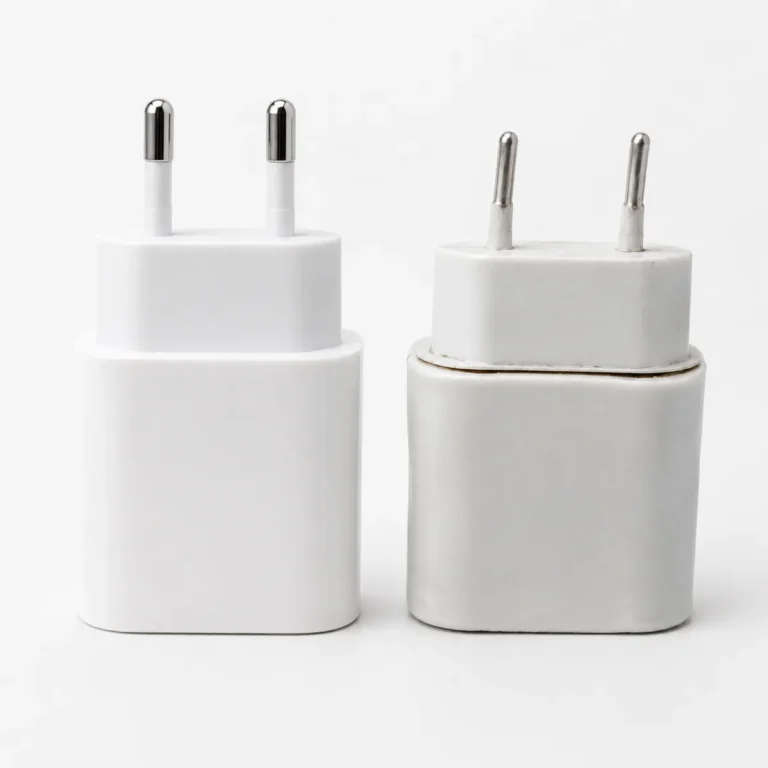
To put real numbers on it, the U.S. Government Accountability Office conducted an undercover investigation by purchasing 47 consumer products from third-party sellers on major online marketplaces. The products included items such as phone chargers, cosmetics, travel mugs, and footwear. Rights holders later determined that 20 of the 47 products were counterfeit. That’s a 43% counterfeit rate in their sample. One of those counterfeits was a phone charger, something millions of people buy every year without thinking about it.
Here’s the thing: those counterfeit chargers were sitting right next to genuine ones on the same platform. A consumer couldn’t tell them apart by looking. That’s the infrastructure problem that makes electronics counterfeiting so insidious. It’s not happening in dark corners of the internet. It’s happening in plain sight on the platforms where people shop every day.
The safety crisis in automotive parts and components
Now let’s talk about what actually happens when these counterfeits fail.
A few years back, the OECD ran testing on counterfeit automobile parts. One of their test cases involved counterfeit Mercedes-Benz brake pads. They conducted standard braking tests at 100 kilometres per hour on dry road conditions. The counterfeit pads took 25 metres longer to stop than genuine pads.
That’s not a minor performance issue. That’s the difference between a controlled stop and a collision. That 25-metre difference is enough to hit the car in front of you at an intersection, enough to swerve into another lane, enough to change the outcome of a moment that lasts less than three seconds.
The Mercedes example isn’t an outlier. The OECD also tested counterfeit BMW brake pads. They began to smoke and disintegrate early in standard testing. Counterfeit airbags may fail to deploy at all, or deploy improperly. Counterfeit suspension components, wheels, and spark plugs have all been seized by customs authorities because they pose clear safety hazards.
In January 2026, the U.S. National Highway Traffic Safety Administration linked suspect replacement air-bag inflators to multiple deaths. Reuters reported that by that point, NHTSA had connected those inflators (likely illegally imported counterfeits or substandard replacements) to at least eight deaths and two severe injuries, with the inflators sending metal fragments into drivers during crashes. NHTSA issued urgent warnings to buyers, repair shops, and insurers to verify the source and documentation of all replacement air-bag systems.
Why counterfeit electronics is a liability problem for your brand
Here’s what most brands don’t realise: a counterfeit carrying your trademark is a form of intellectual property infringement, and even if you’re not directly selling it, liability can still come back to you.
Say a counterfeit component with your trademark on it fails in a car or appliance, and someone gets hurt. The injured party might not know it’s counterfeit. They know the part has your brand name or logo on it. They know what happened next, and they know how to contact a lawyer.
Now you’re in a legal dispute about a product you didn’t manufacture, in a supply chain you don’t control, from a seller you didn’t authorise. The legal bills pile up as your insurer investigates, regulators get involved, and your brand reputation takes a hit. All because a counterfeit with your name on it caused harm.
That’s the liability angle that makes electronics and automotive brand protection different from other categories. With fashion or consumer goods, counterfeiting is a revenue problem. With safety-critical electronics and components, it’s a liability problem. And liability problems can be exponentially more expensive than revenue problems.
The OECD estimates that trade in dangerous fakes, which includes counterfeits of electrical equipment and vehicle parts, reached almost $75 billion in 2019. Automotive spare parts alone accounted for 7% of global customs seizures. These are not fringe products. They’re mainstream supply chain risks.
How to actually protect against counterfeit electronics and components
The most effective defence is not any single technology or tool. It’s a layered control system that combines marketplace enforcement, seller vetting, and supply chain verification.
Marketplace controls and seller management
Start with the platforms. OECD research shows that platforms can reduce counterfeiting by implementing stronger seller verification, seller IDs visible to buyers, country-of-origin disclosures, and special restrictions on high-risk product categories. If you’re an electronics brand, you should be asking your marketplace partners to enforce these controls for safety-critical product categories.
Many brands stop at marketplace enforcement. They run marketplace takedowns, they monitor listings, they work with platforms to remove infringing content. That’s necessary, but it’s not sufficient for electronics and automotive parts because it doesn’t address where the parts actually come from.
For safety-critical parts, origin is the risk. A listing may look legitimate, but if the component came from an unknown supplier, unauthorised distributor, or unverifiable batch, the brand cannot know whether it meets safety and quality standards.
Supply chain verification and traceability
Most brands fall short in this area, so you need to invest heavily here. The FAA has published detailed guidance on detecting unapproved parts in aircraft. The same logic applies to automotive components, replacement parts, and critical electronics. The FAA recommends a four-step process:
- Evaluate your suppliers. Know who you’re buying from. Identify warning signs like prices significantly lower than competitors, delivery schedules far shorter than normal, or the inability to provide documentation showing where the part was made and how it was inspected. If a supplier can’t explain the provenance of a part, don’t buy from them.
- Require traceability. Every part should have verifiable documentation showing where it came from, what approvals it carries, and what inspections it passed. You should be able to trace back through the supply chain to the manufacturer.
- Inspect parts on receipt. Don’t just accept parts based on paperwork. Inspect the packaging to confirm it identifies the supplier correctly and shows no signs of tampering. Verify part numbers and serial numbers against your purchase order, check for altered markings, and review supporting documents. Use approval tags or release certificates as your final verification before accepting the shipment.
- Segregate suspect parts. If something doesn’t match up, the documentation is missing, the serial number doesn’t align, the part looks wrong, pull it out of inventory. Don’t use it. Investigate before it goes anywhere near your distribution network.
That process may sound tedious. But it’s the difference between a counterfeit brake pad making its way into your distribution network and never entering the system in the first place.
Why supply chain verification matters more than you think
Here’s a scenario. You manufacture automotive replacement parts. A distributor orders a batch of components from what looks like one of your authorised suppliers. The price is good. The delivery is fast. The invoice looks legitimate to the distributor.
Six months later, a repair shop installs one of those components in a customer’s car. The component fails. The customer could have been hurt. Now your brand is attached to a failed component you didn’t manufacture, in a system you didn’t control, from a source nobody actually verified.
That’s why supply chain verification is more than just paperwork. It’s how you prevent unauthorised suppliers from entering your authorised distributor network in the first place.
NHTSA’s recent warnings about replacement air-bag inflators highlight this perfectly. The agency urged used-car buyers to get vehicle history reports and have air-bag systems inspected if the vehicle had previously been in a crash. They’re essentially telling consumers to verify the provenance and repair history of safety-critical components before assuming the system is trustworthy. That same principle applies to your supply chain. If provenance and inspection history are unclear, safety cannot be assumed.
What this means for your brand protection strategy
Brand protection for electronics and the automotive sector involves more than just marketplace enforcement. It’s about making sure the supply chain is managed well, checking that suppliers are reliable, and responding to problems fast. So how do you put that into practice?
- Work with your logistics and supply chain teams, not just brand protection. Make sure your distribution partners, repair networks, and resellers understand the verification protocols. They’re the front line of defence against counterfeits entering the system.
- Invest in traceability systems: serial numbers, documentation, approval certificates, and batch tracking. Know where your parts come from and what happened to them before they shipped to the next link in the chain.
- Be aggressive about seller vetting on marketplaces. Don’t just remove counterfeits after they appear. Push platforms to prevent high-risk sellers from listing in safety-critical categories in the first place. That’s a different conversation than takedown volume.
- Build an incident response protocol. If someone reports a suspect component, you need a documented process for investigating it, isolating it from the market if needed, notifying relevant parties, and escalating to legal action if safety is at stake.
That’s a layered control system that’s more complex than traditional brand protection. And here’s what matters: executing it well requires a partner who actually understands electronics and automotive risks. Not every brand protection provider has experience in supply chain verification, incident response in safety-critical categories, or the regulatory landscape around dangerous components. You need someone who speaks the language of traceability, incident escalation, and liability management, not just takedown volume and removal counts.
For electronics and automotive brands, brand protection isn’t about managing a revenue problem. It’s about managing a liability crisis. Your partner should already understand that difference.
Key takeaways
- The evidence is overwhelming even without a clean global figure. Over 90% of fake electronics and auto parts ordered online move by post, and a GAO undercover buy found 43% of a mixed sample counterfeit.
- The failure mode is safety, not just lost sales. OECD tests showed counterfeit brake pads stopping 25 metres later; NHTSA linked suspect air-bag inflators to at least eight deaths in 2026.
- Liability follows your trademark. A fake carrying your name can pull you into a dispute over a product you never made.
- Marketplace takedowns alone don’t cover it. Origin is the risk, so supplier evaluation, traceability, receiving inspection, and segregation of suspect parts do the heavy lifting.
Frequently asked questions
How common are counterfeit electronics and components?
There’s no single global percentage, but the evidence is clear: they’re pervasive. The OECD lists electrical machinery and electronics among the top industries targeted by counterfeiters globally. Over 90% of counterfeit electronics ordered online move through postal channels in small parcels. The U.S. Government Accountability Office found that 43% of consumer products bought from third-party sellers in their undercover operation were counterfeit.
What are the real safety risks?
Failure in safety-critical systems. The OECD tested counterfeit Mercedes brake pads that took 25 metres further to stop from 100 km/h. Counterfeit airbags may not deploy. Counterfeit suspension parts, wheels, and spark plugs all pose documented safety hazards. In 2026, NHTSA linked suspect replacement air-bag inflators to at least eight deaths and two severe injuries.
How can electronics brands protect against counterfeiting?
Combine marketplace controls with supply chain verification. Push platforms for seller vetting, seller IDs, country-of-origin disclosures, and restrictions on safety-critical categories. In your supply chain, evaluate suppliers, require traceability documentation, run receiving inspection, and segregate suspect parts. This layered approach needs a partner who understands both the marketplace and supply chain sides, not just one.
What role does supply chain verification play?
It’s your primary defence against counterfeits infiltrating your authorised supply chain. Supplier evaluation, document traceability, receiving inspection, serial verification, and segregation of suspect parts are how you make sure only legitimate components reach your authorised distributors and resellers. Marketplace enforcement alone catches counterfeits after they’ve already hit the market and possibly reached consumers.
The bottom line
Counterfeiting in electronics and automotive components is not a brand protection problem in the traditional sense. It’s a safety and liability problem that happens to require brand protection tools to solve.
That changes everything about how you should approach it. It’s not about maximising takedowns. Prevention matters more than metrics. The real work is traceability, verification, and incident response to keep dangerous products out of supply chains before they cause harm. For your brand, that means partnering with your supply chain, your logistics teams, and your marketplace partners to build a system that catches counterfeits before they cause harm.
Because unlike a counterfeit handbag, a counterfeit brake pad can have consequences that no brand protection tool can undo.
Related reading
Sources
- OECD & EUIPO: Mapping Global Trade in Fakes 2025
- U.S. GAO: Agencies Can Improve Efforts to Address Risks Posed by Changing Counterfeits Market (GAO-18-216)
- EUIPO & OECD: Dangerous Fakes Report
- NHTSA: Counterfeit and Substandard Air Bags Warning
- FAA: Suspected Unapproved Parts (SUPs) Program
Do you actually know where your safety-critical parts come from?
For electronics and automotive brands, a fake carrying your name is a liability crisis, not just a lost sale. Axencis protects supply chains through layered enforcement, supplier verification, and incident response, with costs covered by recovered assets under the Performance Partnership model.
About the author
Alex Zaika writes on brand protection, anti-counterfeiting, and marketplace enforcement for Axencis. Her work focuses on the practical side of protecting brands across global marketplaces, from proactive monitoring to legal recovery. For questions about brand protection strategy, get in touch.