Counterfeiting in Licensed Entertainment Merchandise: The Revenue You Don’t See
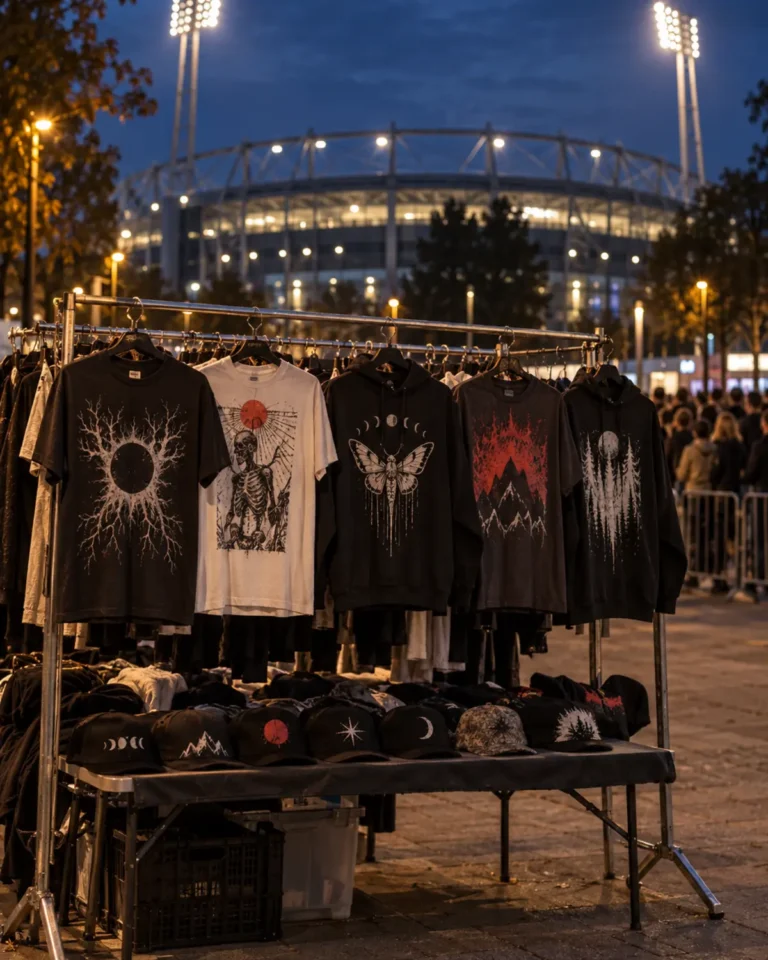
A tour goes on sale. Within 48 hours, knockoff merchandise appears on TikTok Shop, Instagram, and a dozen small e-commerce sites. A film drops. Unlicensed figurines and apparel copy the official art. A championship game approaches. Counterfeit jerseys and memorabilia flood marketplaces at a fraction of official retail price.
For talent managers, agents, and entertainment rights holders, this results in lost revenue, customer confusion, and loss of control over how their intellectual property is presented in the market.
According to Licensing International’s 2026 Global Licensing Industry Study, global sales of licensed merchandise and services reached $389.8 billion in 2025, with Character/Entertainment properties accounting for $161.8 billion of that total. That’s apparel, collectibles, toys, artwork, memorabilia, recorded media, and everything fans want to own to show their connection to an artist, film, team, or character. And counterfeiting follows attention like a shadow.
When fans are most eager to buy, unauthorized sellers are ready to sell.
Annual counterfeit goods sold globally
Every takedown reviewed by a person
Character and entertainment licensed merchandise sales in 2025 (Licensing International)
Costs recovered from infringers, not a flat retainer
Last updated: September 2026
By: Alex Zaika, Axencis
Why is entertainment merchandise such a rich target?
Entertainment merchandise sits at the intersection of two massive markets: licensing and counterfeiting.
The licensing side is straightforward. Entertainment properties generate substantial revenue across multiple highly merchandisable categories. These are products built around recognizable names, characters, logos, and imagery, which also make them attractive targets for counterfeiters looking to capitalize on existing fan demand.
Organization for Economic Cooperation and Development (OECD) research shows that clothing, footwear, and leather goods account for 62% of seized counterfeit goods globally. In the EU, games, toys, recorded media, and packaging materials are among the most commonly detained counterfeit categories. Those product categories are exactly what entertainment licensing covers.
Distribution has also become fragmented enough that counterfeiting operates efficiently at small scale. The OECD reports that 79% of counterfeit seizures in 2020-21 involved shipments containing fewer than 10 items. Counterfeiters don’t need massive warehouses anymore. They can operate as dozens of small sellers on TikTok Shop, scattered Etsy accounts, through anonymous overseas storefronts, and marketplace accounts that appear, sell for a week, and disappear.
That fragmentation is actually a problem for enforcement teams. When counterfeits appeared in large shipments, enforcement was concentrated. Seize one warehouse, stop thousands of units. When the same counterfeiting happens through 500 small parcels across different sellers, the enforcement problem multiplies.
If the average counterfeit item sells for $20 a time, a few hundred sellers can still divert significant revenue collectively, and confuse fans about where to buy the real thing. But the bigger headache is enforcement itself. Chasing one large counterfeiter is a single fight. Chasing three hundred small sellers is three hundred smaller fights, each one eating time and resources without ever feeling like real progress.
Which types of merchandise are most at risk?
Apparel is the obvious place to start. Band-branded clothing, such as concert T-shirts and hoodies, as well as sports merchandise like jerseys and baseball caps, gives counterfeiters several attractive opportunities: recognizable branding, relatively simple manufacturing, strong event-driven demand, and high visual discoverability online. Apparel also appears consistently in major sports counterfeiting enforcement actions, particularly jerseys, T-shirts, hats, and other event-related merchandise.
Toys, figures, games, and collectibles represent another major cluster. Licensed toys alone generated $46.4 billion in sales in 2025. That market extends across film, television, anime, gaming, and character properties. The EU reported in 2024 that games and toys were among the most commonly detained counterfeit categories. Character merchandise is a particular risk because the legitimate market is so valuable and the counterfeit overlap so direct.
Memorabilia and collectibles deserve separate attention because authenticity here involves more than straightforward trademark counterfeiting. Signed items, limited editions, authenticated pieces, and supposedly performance-associated objects introduce questions about provenance and false claims alongside brand imitation.
Jewelry and accessories appear consistently in sports enforcement operations. World Cup and Super Bowl seizures both included counterfeit watches, rings, necklaces and official merchandise knockoffs. For celebrity and sports brands, premium collectibles and accessories are high-margin targets.
Recorded media, including CDs and DVDs, remained a significant counterfeit category in 2024. EU authorities reported recorded CDs/DVDs among the most commonly detained counterfeit products. But the production component that often goes unnoticed is the tags, labels, stickers, and packaging materials themselves. The European Commission notes that modern counterfeiting sometimes involves shipping inexpensive labels, tags, and packaging separately from unbranded goods, then assembling them later to make cheap products appear legitimate. Enforcement teams need to monitor for this component counterfeiting, not just finished fake products.
When does counterfeiting spike around entertainment events?
The strongest pattern in current entertainment enforcement is event-driven concentration. Counterfeiting doesn’t happen uniformly throughout the year. It spikes around moments of peak attention and commercial opportunity.
The evidence is clearest in sports. Ahead of Super Bowl LIX in New Orleans, U.S. authorities reported that a year-long nationwide crackdown on counterfeit sports merchandise had seized more than 214,500 items worth $39.5 million. The following year, Super Bowl LX enforcement resulted in the seizure of 276,392 items worth $33.4 million. The seizures again featured familiar product categories such as jerseys, T-shirts, hats, jewelry, and memorabilia.
The 2026 FIFA World Cup shows the same pattern. By late July, U.S. Customs and Border Protection (CBP) reported nearly 2,300 World Cup-related seizures comprising almost half a million pieces worth $33.1 million. An international European operation seized more than 66,000 counterfeit football jerseys and kits weighing over 16 tonnes. These figures show how enforcement concentrates around major sporting events, as authorities respond to the heightened risk of counterfeit merchandise.
Counterfeiting in the music industry follows a similar event-driven pattern, though much of the evidence appears in litigation rather than customs seizures. In 2026, a number of music rights holders filed tour-specific lawsuits against counterfeit merchandise sellers, with actions targeting unauthorized merchandise around Bruce Springsteen and The E Street Band, BTS, and A$AP Rocky concerts.
In the BTS case, the timing was explicitly tied to upcoming performances in Tampa: HYBE sought emergency relief against bootleg merchandise sellers ahead of the concerts, resulting in an order restricting unauthorized sales within a 10-mile radius of the venue during the event period.
Merch Traffic, a music merchandise and licensing company, also filed a lawsuit against anonymous online sellers allegedly offering counterfeit merchandise associated with artists including Nirvana, Bruno Mars, Harry Styles, and The Cure.
Together, these cases show how music merchandise enforcement can concentrate around specific concert dates and venues, when rights holders anticipate heightened counterfeit activity.
This creates a practical calendar for talent managers. Counterfeiting risk isn’t constant – it’s predictable and tied to moments that drive legitimate demand.
Tour announcement and ticket on-sale: This is when counterfeiting monitoring should intensify from the baseline. Search for artist name plus tour name plus city and date combinations on all major marketplaces just before merchandise demand peaks. Counterfeiters watch the same tour announcements that fans do to know when their captive audience will be highest.
Days and weeks before concert dates: This is a key enforcement window. Monitoring should focus on local marketplaces, social commerce, and potential physical vendors near venues. Recent US litigation shows rights holders taking legal action against unauthorized merchandise sellers specifically around scheduled performances, including seeking restrictions on sales near concert venues during event periods.
Championship and tournament build-up: Treat these as major enforcement windows. Super Bowl and World Cup operations demonstrate substantial pre-event and event-period counterfeit seizures. Start monitoring and customs preparation weeks before the event.
Film, series, and game launches: New properties create new counterfeit opportunities. Fictional characters, artwork, logos, and collectibles need monitoring around newly released properties. Licensed toys, figures, and character merchandise see demand spikes with launches.
Album drops and merchandise releases: Monitor exact artwork, product names, and newly introduced marks immediately upon release. Music trademarks can include artist names, band logos, album titles, and tour names – all potential counterfeiting targets.
Post-event period: Don’t stop enforcement when the event ends. Online inventory and seller networks don’t disappear when a tour finishes or a game concludes. Fragmented global e-commerce means enforcement should remain sustained even after peak attention fades.
The window to act is before the peak, not after it. Taking action before and during periods of heightened demand protects legitimate merchandise sales while the commercial opportunity is still available. This approach is more effective than dealing with infringement only after the damage has been done.
What’s the difference between counterfeit, bootleg, unlicensed, and resale?
One reason entertainment merchandise enforcement gets confusing is that managers use “counterfeit,” “bootleg,” “unlicensed,” and “resale” interchangeably. But they’re not the same thing legally, and mixing them up can waste enforcement resources on cases that won’t actually succeed.
Counterfeit merchandise specifically uses a protected trademark to imitate official products. A T-shirt using a band’s actual logo and claiming to be official tour merchandise is counterfeit. Unlicensed merchandise is broader – it includes anything using protected images, characters, or artwork without permission, but it’s not necessarily passed off as official. An artist photograph on a T-shirt without authorization might be unlicensed, but not technically counterfeit if it doesn’t use the band’s trademark or claim to be official merchandise.
Bootleg is a common term used in the music industry to describe unauthorized recordings or merchandise. However, it is not itself a distinct legal cause of action and should be treated as shorthand. Enforcement against bootleg merchandise generally relies on the underlying intellectual property rights involved, such as trademark or copyright.
Authentic resale involves genuine products being sold outside the brand’s authorized distribution channels. This can fall into gray-market territory, where the legal position is more nuanced than with straightforward counterfeiting. Some resale may be lawful, while other cases can create grounds for enforcement depending on factors such as how the goods entered the market, where they are being sold, and the rights involved. For entertainment brands, the decision to act may also depend on the artist’s relationship with their fan base, existing distribution arrangements, and the commercial impact of the seller.
The challenge is that gray-market goods and counterfeits can look similar at first glance: both may appear through third-party sellers outside authorized channels. The first question is whether the product itself is genuine. If it is, that doesn’t necessarily rule out enforcement. Instead, the case requires a more careful legal and commercial assessment rather than being treated as straightforward counterfeiting.
This distinction matters because mistakenly targeting genuine goods can do more than waste enforcement resources. It can damage relationships with legitimate sellers and distributors, disrupt existing distribution arrangements, and create friction with fan communities. Repeated or poorly supported takedowns can also undermine credibility with platforms. That’s why human-verified takedowns matter here.
What does event-driven enforcement look like in practice?
For music, the enforcement evidence comes from actual litigation. In 2026, major artists and merchandisers filed lawsuits specifically targeting unauthorized merchandise around concert tours. Bruce Springsteen and The E Street Band, BTS, and A$AP Rocky all pursued legal action to stop counterfeits being sold at or around their specific performance dates. The Merch Traffic case is particularly instructive because it didn’t just target venue bootleggers. It went after anonymous overseas e-commerce storefronts – the kind of distributed, small-scale sellers that characterize modern counterfeiting. The strategy wasn’t “stop one warehouse.” It was “disrupt a network of sellers operating across multiple continents and platforms.”
That’s exactly what the OECD data predicts. With 79% of counterfeit seizures involving shipments under 10 items, enforcement against entertainment merchandise can’t look like traditional anti-counterfeiting operations targeting big factories. It looks like network disruption across multiple small channels.
Who manages entertainment merchandise enforcement?
The person managing this isn’t necessarily the talent. It’s the manager, agent, estate representative, rights administrator, or in-house merchandising team. That’s an important distinction because entertainment merchandise often depends on multiple rights – trademark, copyright, and personality rights – that may be licensed separately or controlled by different parties.
The first step is building the rights portfolio. Catalog every registered trademark, logo, copyright, licensed photograph, artwork, and character right that covers the property. Document which contracts authorize enforcement and who can act. Entertainment merchandising isn’t one IP asset. It’s an accumulation.
Then map the official merchandise. Maintain current product imagery, SKUs, tags, packaging, authorized retailers and licensees, and launch dates. When enforcement teams examine suspected counterfeits, they need to distinguish fakes from genuine resale and from other forms of unauthorized merchandise. Customs agencies benefit from this detail too.
Next, commit to calendar-driven enforcement intensity. Increase monitoring before tours, premieres, major games, championships, and product drops. The goal isn’t to maintain maximum monitoring and enforcement intensity at all times. It’s to allocate resources strategically, maintaining a baseline level of protection while reserving additional monitoring, investigation, and enforcement capacity for periods when risk is expected to rise. This allows teams to focus time and budget where they are likely to have the greatest impact, rather than spreading resources evenly throughout the year.
Broaden the monitoring surface beyond a single marketplace. Search Amazon, eBay, Etsy, TikTok Shop, Instagram, standalone e-commerce sites, and repeat seller networks. Capture seller identity, listing URLs, images, pricing, and account connections. Online retail now represents 32% of global licensed merchandise sales, and social commerce accounts for 16% of online licensed sales. Ignoring these channels and focusing only on brick and mortar stores or customs shipments is like ignoring half the market.
When you find suspected counterfeits, classify before reporting. Is this a counterfeit using your trademark? Unauthorized use of copyrighted artwork? Impersonation or false claims? “Unofficial” doesn’t automatically mean “counterfeit.” Entertainment merchandise can involve several different types of infringement, and each needs to be assessed and handled differently.
Use platform-specific tools for reporting. On Amazon, enrolled brands can use Report a Violation or Project Zero’s self-service removal. On eBay, the Verified Rights Owner (VeRO) program lets rights holders report infringing listings. Etsy has an IP Reporting Portal where rights holders can search listings and compile reports. TikTok Shop also has its own intellectual property reporting process. Each platform has different workflows and evidence requirements, so enforcement can’t rely on one generic template copied everywhere.
Secure and record your rights before the high-attention period. In the US, owners of federally registered trademarks and copyrights can use CBP’s eRecordation program for border protection. In the EU, rights holders can file an Application for Action requesting customs enforcement. These steps should be taken before a tour, tournament, major release, or other high-risk period, rather than waiting until counterfeit activity has already escalated. Rights holders should also make sure their IP is registered with the relevant offices in the territories where they expect to need protection. Having the right registrations and customs measures in place early puts you in a much stronger position to act when infringement appears.
Finally, escalate the strategic offenders. When the same seller or network keeps reappearing despite takedowns, when unauthorized merchandise circulates at commercial scale, or when brand control and revenue impact justify the investment, preserve evidence for potential injunctions, seller identification, asset restraint, damages, or coordinated enforcement.
Key takeaways
- Counterfeiting follows attention. Tour on-sales, championships, and launches bring predictable spikes in fake merchandise.
- The window to act is before the peak. Record rights with customs and intensify monitoring ahead of the event, not after.
- Fragmentation is the enforcement problem. 79% of counterfeit seizures involve fewer than 10 items, so enforcement looks like network disruption, not warehouse raids.
- Classify before you report. Counterfeit, unlicensed, bootleg, and authentic resale are different legal situations.
- Escalate the repeat offenders. When sellers keep resurfacing despite takedowns, move to legal action.
Frequently asked questions
How big is the counterfeit entertainment merchandise problem?
There’s no clean global percentage, mostly because counterfeit data gets sorted by physical product (clothing, toys, media) while licensing data gets sorted by property type (music, sports, film). But the legitimate market is worth $389.8 billion, and counterfeiters chase the exact same categories that drive it. A market that large doesn’t need a tidy statistic to tell you the fake side is a real problem too.
What types of entertainment merchandise are most counterfeited?
Apparel leads by a wide margin. Concert tees, hoodies, and tour jerseys are cheap to copy and manufacture and easy to sell around live events. Toys and collectibles come next, especially anything tied to film or character properties, followed by jewelry and memorabilia that show up again and again in sports enforcement operations. Wherever fans are buying the real thing, someone’s usually selling a fake version nearby.
How can talent managers protect merchandise revenue?
Start with a maintained rights portfolio that documents every trademark, copyright, and licensed asset tied to the property, then map what official merchandise actually looks like so fakes are easy to spot. Ramp up monitoring before tours, launches, and major events rather than trying to watch everything at once, and use each platform’s own takedown tools instead of a one-size-fits-all report. Recording rights with customs ahead of time matters too, and when the same sellers keep resurfacing, that’s the signal to move from takedowns to legal action.
When does counterfeiting spike for entertainment brands?
Right around the moments fans care most. Tour announcements and ticket sale launches set it off almost immediately, and the window right before a show is typically the riskiest stretch. Major tournaments like the Super Bowl or World Cup trigger their own enforcement surges, and film, game, or album releases bring a fresh wave of fakes tied to new artwork and branding. The pattern holds up well enough that enforcement doesn’t need to run flat out year-round, it just gets sharper around these windows.
How do you build a coordinated program?
The managers and agents with the best protection aren’t the ones trying to enforce every violation equally. They’re the ones who build a calendar of high-attention moments, prepare their rights portfolios and customs recordings ahead of time, monitor more intensively before tours and launches, maintain relationships with enforcement teams who understand platform-specific processes, and reserve legal escalation for the repeat offenders and networks that takedowns alone can’t solve.
For entertainment properties, counterfeiting is no longer something to address only after the fact. A proactive approach means anticipating when and where risk is likely to increase, preparing for it, and strategically disrupting infringement around the moments that matter most.
Next steps
If you’re managing an entertainment property or artist, start by cataloging your rights and mapping authorized merchandise. Know what official products exist so you can spot fakes. Schedule monitoring to intensify around key moments on your calendar.
For organized counterfeiting networks or large-scale revenue loss, legal enforcement may be necessary. Our legal services page covers how we pursue organized networks and help recover damages.
Sources
- Licensing International – 2026 Global Licensing Industry Study
- OECD-EUIPO – Mapping Global Trade in Fakes (2025)
- European Commission – EU enforcement of intellectual property rights at the border (2024 results)
- U.S. Customs and Border Protection – Super Bowl LIX, Super Bowl LX, and 2026 FIFA World Cup seizure announcements
- U.S. court filings – HYBE (BTS), Bruce Springsteen and The E Street Band, A$AP Rocky, and Merch Traffic counterfeit merchandise actions (2026)
Questions About Protecting Your Entertainment Property?
Counterfeit merchandise peaks when fan demand does. Axencis plans enforcement around your tour dates, launches, and events, and escalates the sellers who keep coming back.
About the author
Alex Zaika writes on brand protection, counterfeit enforcement, and marketplace risk for Axencis, a brand protection and IP enforcement company. For questions about enforcement strategy, get in touch.