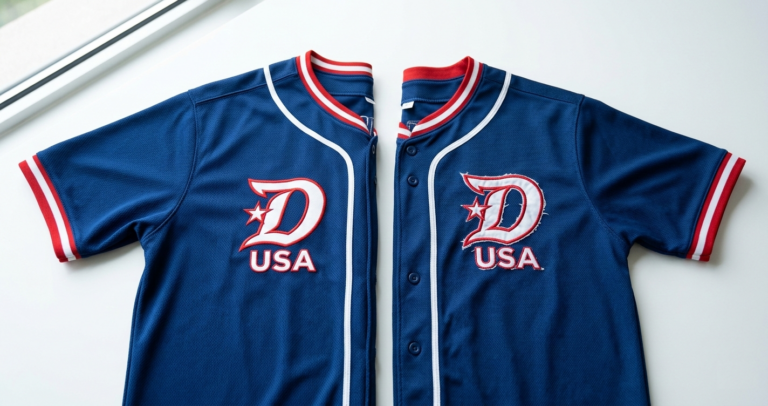
Over $2 trillion worth of counterfeit goods are sold every year, and major sporting tournaments are where the problem gets concentrated into its most profitable window. When a national team reaches peak visibility, merchandise demand surges within hours. Jerseys sell out. Limited edition drops vanish before most fans even see them. And counterfeit sellers – who’ve been preparing for months – are ready to fill the gap. This isn’t random opportunism. It’s a well-rehearsed playbook that exposes the limits of standard brand protection programs.
Annual counterfeit goods sold globally
Every takedown reviewed by a person
Fake goods seized by Amazon in 2024
Costs covered by recovered assets
Last updated: March 2026
By: Alex Zaika, Axencis
Why do counterfeit sellers target major tournaments?
Major tournaments create urgency alongside excitement. When a national team hits peak visibility, merchandise demand accelerates dramatically. Jerseys sell out within hours of release. Limited edition drops disappear before many fans see them. Social media feeds fill with highlights, fan photos, and purchase links directing buyers to various retailers.
This energy is intense and compressed. Millions of fans want to participate simultaneously, creating concentrated demand patterns that counterfeit sellers have been waiting for all year. For counterfeit operations, tournament hype isn’t just background noise. It’s about exploiting the perfect storm of limited supply, rushed buyers, and overwhelmed enforcement systems.
Global events concentrate what would normally be months of steady consumer demand into a few short weeks. Official retailers struggle to maintain adequate inventory as demand surges unpredictably based on team performance. Shipping timelines stretch as logistics networks face unprecedented volume. Prices rise due to scarcity. Search traffic explodes across all channels.
As demand stays high, unofficial sellers step in to get their share. They position themselves as convenient alternatives for fans who can’t access sold-out official merchandise or don’t want to wait weeks for shipping. The psychological pressure of limited-time availability works in their favor – fans feel they need to act quickly or miss their chance to participate in the cultural moment.
How do counterfeit operations prepare before a tournament starts?
Most counterfeit operations don’t begin when the tournament starts. They prepare months in advance. This is where most enforcement programs get it wrong – they’re reactive by design, gearing up only when the infringement wave hits. By then, it’s already too late to contain.
National team colorways follow predictable patterns established over years of releases. Jersey formats remain relatively consistent within each tournament cycle. Design elements, typography styles, and color blocking schemes can often be anticipated based on previous releases and leaked images.
As soon as tournament fixtures are announced and fan anticipation begins building, counterfeit sellers start uploading listings across multiple marketplaces. They create product pages, upload images, establish seller accounts, and build initial inventory. By the time opening matches begin, many counterfeit networks are already fully operational across dozens or hundreds of accounts spanning multiple platforms.
What appears to enforcement teams as a sudden flood of infringement? It’s often the result of careful preparation and timing. Through experience, unauthorized sellers have learned exactly when to launch their operations to maximize visibility during peak search periods while minimizing exposure to early enforcement efforts.
How do sellers evade standard detection systems?
During peak tournament weeks, enforcement teams face unprecedented volume. Individual listings may deliberately avoid using official team names or registered trademarks in their titles or descriptions. Instead, sellers rely heavily on visual similarity to official merchandise. A jersey may display the correct national colors, authentic layout, and familiar typography and design elements, but have an altered or missing official logo.
Product pages might use generic descriptions like “2026 Home Kit” or “National Team Jersey” rather than official titles that would trigger trademark filters. To automated enforcement systems programmed to detect exact trademark matches, these listings can appear technically compliant with platform policies. To consumers scrolling quickly through search results, they look authentic enough to warrant a purchase – especially at significantly discounted prices.
This is where the real enforcement vulnerability sits. Most basic takedown systems are designed to catch obvious violations: direct logo misuse, clear word mark infringement, blatant copying of registered trademarks. These systems do well at removing listings that explicitly infringe registered intellectual property in ways that automated text and image matching can identify.
But sophisticated sellers build their operations specifically around these known enforcement limitations. They adjust spellings in strategic ways. They crop product images to remove or obscure logos while maintaining overall design similarity. They redesign just enough to stay below automated detection thresholds while preserving the same overall look and feel that makes the product appealing to consumers seeking official merchandise.
| Approach | What it catches | What it misses | Tournament readiness |
|---|---|---|---|
| Automated detection | Exact logo copies, word mark matches, obvious trademark violations in listing text | Design-based imitation, cropped logos, altered spellings, visual similarity without trademark text | Struggles with volume surges. High false positive rates during peaks force manual review backlogs. |
| Human-verified enforcement | All of the above, plus design-based infringement, color blocking imitation, network patterns across seller accounts | Slower on individual listing speed. Requires trained analysts with category expertise. | Scales with preparation. No false positives against legitimate sellers. Can identify coordinated networks. |
| Hybrid (automation + human review) | Broad coverage with accuracy on edge cases. Automated flagging feeds human decision-making. | Depends entirely on the quality of human review layer. Automation without verification still produces false positives. | Best positioned if the human element is genuine, not a rubber stamp on automated decisions. |
The table tells the story clearly enough. Automation alone catches the obvious cases – the low-hanging fruit that would probably get reported by consumers anyway. The sophisticated operations that cause the most damage during tournaments? They’re specifically designed to slip through those filters. That’s why the human-verified approach matters. Not as a nice-to-have, but as the only reliable way to catch design-based infringement at scale.
Why does enforcement fail during tournament surges?
The result is a significant enforcement gap that becomes particularly problematic during compressed tournament periods. Some listings get identified and removed through standard processes. Many others remain active and continue generating sales. Removed sellers frequently reappear under new accounts, often within days or even hours.
Because tournaments operate on short timescales – typically lasting only a few weeks – even brief periods of unchecked counterfeit activity can translate into substantial revenue loss for rights holders. A seller operating undetected for two weeks during a major tournament might generate more sales than they would during six months of normal market conditions. Let that sink in.
Automated detection that works adequately during normal periods produces high false positive rates when applied to the increased volume during tournaments. This forces enforcement teams into an impossible choice: accept lower accuracy (and risk taking down legitimate sellers) or manually review overwhelming quantities of flagged listings. Neither option is good. And that’s exactly the dilemma counterfeit sellers are counting on.
What does effective tournament protection actually require?
Tournament-driven counterfeiting represents more than just a trademark enforcement issue. It combines timing challenges, visibility problems, and design-based infringement that traditional enforcement approaches struggle to address effectively. Here’s my honest take: if your protection program only kicks in after the opening ceremony, you’ve already lost the first week.
Effective response requires looking beyond exact logo matches and registered word marks. Protection programs need to evaluate the full identity of merchandise – the composition, layout, color blocking, typography style, and overall presentation. This means examining visual similarities that create consumer confusion even without direct trademark copying.
It requires monitoring seller behavior patterns rather than just individual listings. Organized counterfeit operations typically operate multiple interconnected accounts across different platforms. Identifying these network connections allows for more complete disruption than removing isolated listings one at a time.
It demands attention to cross-border marketplace activity. Many counterfeit sellers operate internationally, sourcing products from manufacturers in one region while listing them on marketplaces serving completely different geographic markets. Effective IP enforcement must coordinate across these jurisdictional boundaries rather than focusing only on domestic platforms.
Standard enforcement approaches designed for steady-state market conditions often fail during these surge periods. Systems optimized for processing moderate volumes of clearly identifiable infringement struggle when faced with hundreds or thousands of listings that intentionally avoid obvious violations while still deceiving consumers.
Counterfeit sellers don’t think in legal categories. They don’t organize their strategies around trademark law, copyright protection, or trade dress principles. They look for windows of opportunity when market conditions favor their operations. Major sporting events provide one of the clearest and most profitable opportunity windows of the entire year.
How Axencis approaches tournament protection
Axencis was built around the principle that automated systems alone can’t handle the sophistication of modern counterfeit operations – particularly during high-pressure events. Every takedown goes through human verification, which means legitimate sellers don’t get caught in the crossfire. That matters during tournaments when false positives can damage relationships with authorized retailers who are also trying to meet surge demand.
The Performance Partnership model means protection costs are covered by assets recovered from infringers, not upfront fees. Rights holders get enforcement that scales with the problem rather than enforcement limited by a fixed budget that runs out halfway through the event. It’s a different way of thinking about brand protection – one where Axencis only succeeds when the client does.
How should rights holders prepare before the next event?
For national teams and licensing partners, the fundamental question isn’t whether infringement will spike during a tournament. Historical patterns make that virtually certain. The relevant questions are whether current enforcement approaches can handle the specific challenges these events create: the speed at which counterfeits appear, the scale of operations across multiple platforms, the sophistication of design-based imitation that avoids traditional detection, and the compressed timeframe that makes delayed response ineffective.
Effective tournament protection requires preparation that begins well before opening matches. This means establishing monitoring across all relevant marketplaces, not just primary sales channels. It means developing capabilities to identify design-based infringement rather than relying solely on trademark matching. It means having enforcement capacity that can scale rapidly when surges occur rather than becoming overwhelmed by volume.
It also means recognizing that the most sophisticated counterfeit operations understand enforcement systems as well as the brands they’re targeting. They’ve adapted their strategies specifically to exploit known gaps in automated detection. Countering these evolved tactics requires similar evolution in protection approaches – moving beyond basic automation toward strategies that combine technology with human judgment and legal expertise.
Tournament periods reveal whether brand protection programs are built for the realities of modern counterfeit operations or just optimized to handle the easy cases that would likely disappear on their own. The difference becomes apparent when market conditions shift from steady-state to high-pressure. That’s exactly when effective protection matters most.
If you’re a rights holder reading this ahead of a major event, ask yourself one question: could your current enforcement partner handle a 10x spike in counterfeit listings within the first 48 hours? If the answer isn’t a confident yes, it’s time to look at what needs to change. You can read more about how national team merchandise creates specific IP risks in our companion article.
Key takeaways
- Counterfeit operations prepare months in advance – By the time a tournament starts, fake merchandise networks are already fully operational across dozens of marketplace accounts.
- Automated detection isn’t enough – Sophisticated sellers deliberately design around trademark filters, using visual similarity and altered spellings that automation can’t reliably catch.
- Two weeks of unchecked activity can exceed six months of normal sales – The compressed timeline of tournaments means even short enforcement delays translate to significant revenue loss for rights holders.
- Reputational damage outlasts the tournament – Fans blame the team, not the anonymous seller. A single viral post showing counterfeit gear can cause brand damage that persists for years.
- Effective protection requires human verification – Only human-reviewed enforcement can reliably identify design-based infringement without creating false positives against legitimate sellers.
Frequently asked questions
Why do counterfeit sellers target tournament merchandise specifically?
Tournaments create a concentrated window of extremely high demand combined with limited official supply. Fans feel time pressure to buy before matches, making them less likely to verify seller credentials. This combination of urgency, scarcity, and emotional investment creates ideal conditions for counterfeit operations to thrive.
How early do counterfeit operations start preparing before a tournament?
Most organized counterfeit networks begin preparing 2-3 months before a major event. They study predictable jersey design patterns, create seller accounts to build history, and pre-upload listings across multiple marketplaces. By the time the first match kicks off, they’re already fully operational.
What techniques do counterfeit sellers use to avoid detection?
Sellers use generic product descriptions like “2026 Home Kit” instead of official team names to avoid trademark filters. They crop images to remove or obscure logos while maintaining overall design similarity. They adjust spellings strategically and redesign just enough to stay below automated detection thresholds while keeping the product visually convincing.
Why can’t automated systems catch tournament counterfeits effectively?
Automated systems are designed to detect exact trademark matches and obvious logo violations. During tournaments, sophisticated sellers specifically avoid these triggers while using design-based imitation that creates consumer confusion. The volume surge also produces higher false positive rates, forcing enforcement teams to choose between accuracy and speed.
How much revenue can counterfeit sellers generate during a tournament?
A single counterfeit seller operating undetected for two weeks during a major tournament can potentially generate more sales than they would during six months of normal market conditions. With the global counterfeit market exceeding $2 trillion annually, sporting events represent one of the most profitable windows of the year.
What’s the difference between trademark-based and design-based counterfeiting?
Trademark-based counterfeiting involves directly copying logos, word marks, and registered IP – this is what automated systems are built to catch. Design-based counterfeiting replicates the overall look and feel of merchandise (colors, layout, typography) without using protected marks directly. The second type is harder to detect and increasingly common during tournament periods.
How does counterfeit merchandise damage a team’s reputation?
Fans who receive low-quality counterfeit gear typically blame the team rather than the anonymous online seller. Social media amplifies this effect during tournaments when fan engagement is at its peak. A single viral post showing substandard merchandise can reach millions, creating negative brand associations that persist long after the event ends.
What should rights holders look for in a tournament protection partner?
Rights holders should look for enforcement partners that can identify design-based infringement (not just trademark matches), monitor seller behavior patterns across platforms, scale capacity rapidly during surge periods, and coordinate across international marketplaces. Human verification of takedowns is critical to avoid false positives against legitimate sellers during high-volume periods.
Sources
- OECD/EUIPO – Trade in Counterfeit and Pirated Goods: Mapping the Economic Impact
- Amazon Brand Protection Report 2024 – 15 million counterfeit goods seized
- Business Research Insights – Brand Protection Software Market Report (2024-2033)
Is your brand ready for the next tournament?
Get a risk assessment of your current enforcement program before the next major event. We’ll identify gaps in your detection coverage and show you where counterfeit sellers are most likely to exploit your brand.
About the author
Alex Zaika is part of the team at Axencis, specializing in brand protection strategy for rights holders and licensing partners. Alex’s analysis draws on direct experience working with organizations that face counterfeit threats during high-profile sporting events and seasonal demand surges. For questions about tournament protection or enforcement strategy, get in touch.