Brand Protection for Fashion Brands: Industry Guide
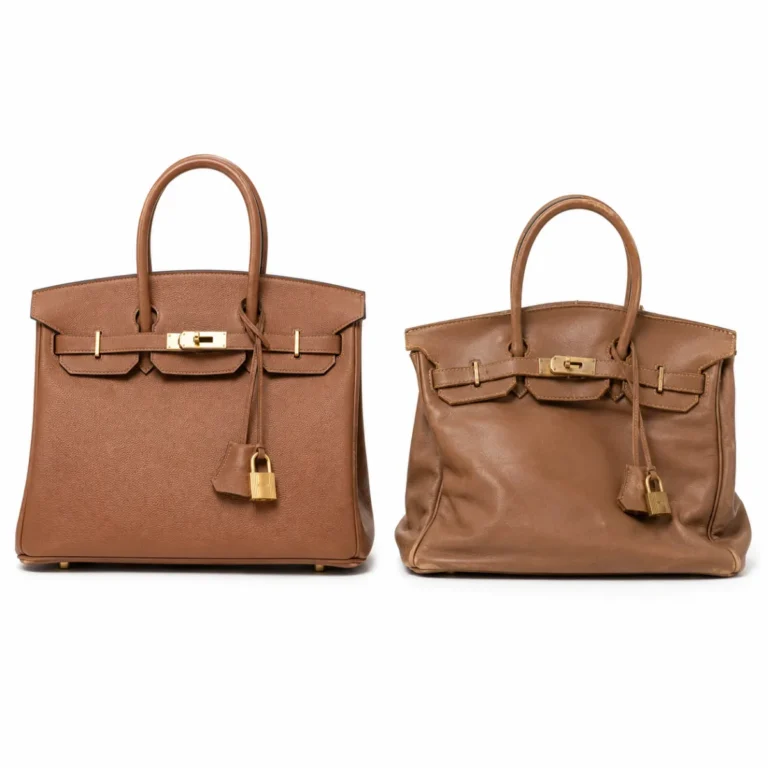
Fashion is the most counterfeited category in the world, and a fake can damage your brand before the customer even knows it’s fake. A Louis Vuitton handbag lands on a customer’s doorstep. The color looks right. The stitching looks right. The monogram canvas looks right. They take it to the office, show their friends, post it on Instagram. Three weeks later, they discover it is counterfeit. By then they have already experienced the brand through a fake product, associated low quality with the name, and told others they bought from a discounted seller. The damage to brand perception has already happened.
Annual counterfeit goods sold globally
Every takedown reviewed by a person
Fashion leads global counterfeit seizures (OECD/EUIPO)
Costs covered by recovered assets
Last updated: June 2026
By: Alex Zaika, Axencis
This is the fashion brand protection problem in a single story. It is not just about lost sales on that one bag. It is about the erosion of brand value when counterfeits flood the marketplace, when customers cannot distinguish authentic from fake, and when the brand’s name itself becomes associated with confusion rather than quality.
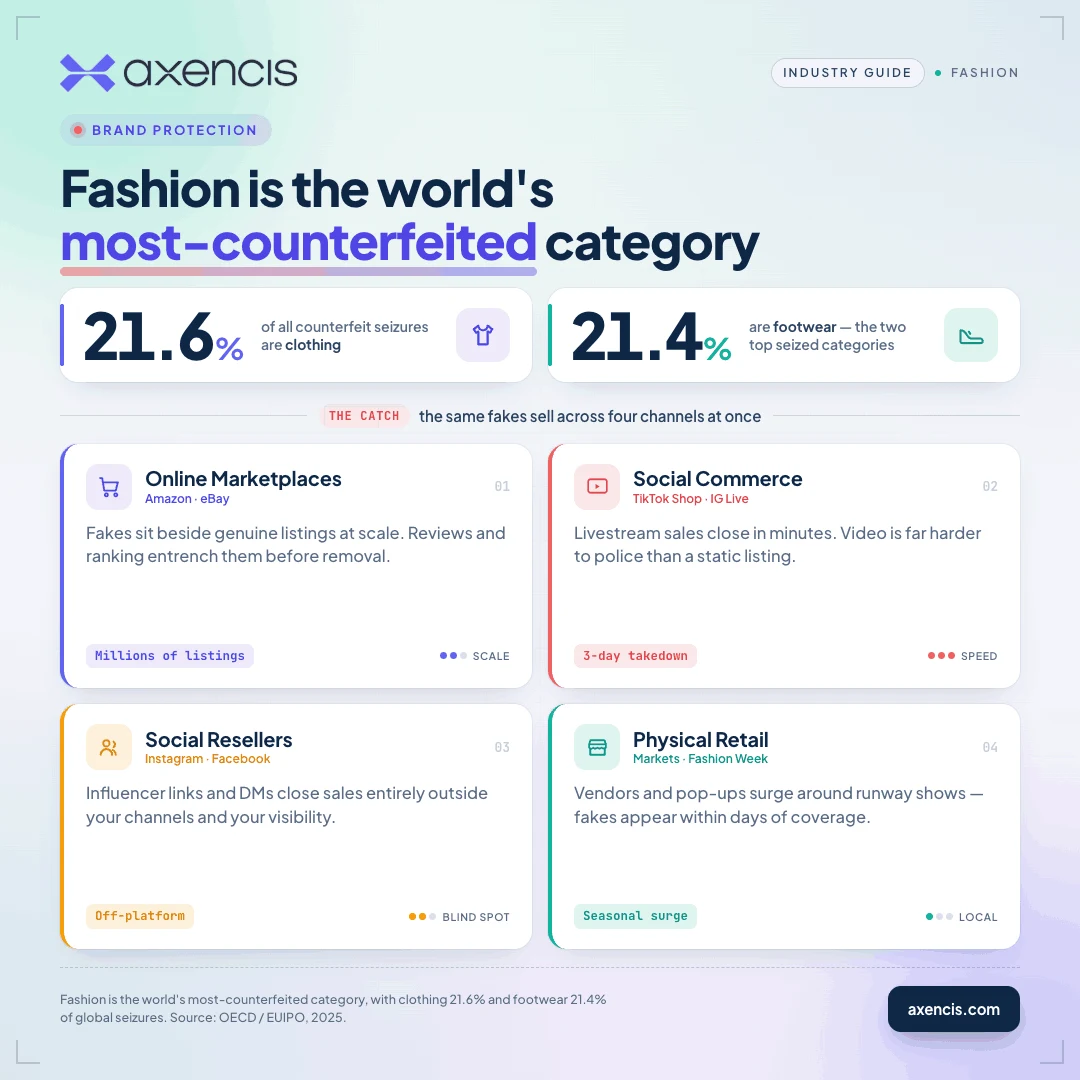
In the OECD and European Union Intellectual Property Office’s 2025 global mapping report, clothing represented 21.6% of all counterfeit seizures and footwear 21.4%. Leather goods, accessories, cosmetics, and watches round out the top categories. But the problem is not just scale. It is the speed at which counterfeits move through channels, the sophistication of fake manufacturers, and the complexity of enforcing across marketplaces, social commerce, and physical retail at the same time.
For luxury brands, where the name accounts for a large portion of the brand’s value, counterfeiting is an existential challenge. For mass-market fashion brands, it is a revenue and reputation problem. For all fashion brands, it requires a specific enforcement strategy that goes beyond generic brand protection. This guide examines why fashion counterfeiting is different, how it damages brand value, and what actually works.
Why is fashion the most vulnerable category?
The vulnerability is structural because fashion products are relatively simple to copy. A shoe manufacturer can replicate a silhouette, source similar materials, and produce at scale quickly. A print shop can recreate a graphic and transfer it to fabric. A leather goods maker can build a bag that looks like the original to a consumer’s eye.
The market incentives are clear too. Fashion moves fast, trends change, and counterfeiters benefit from that speed. They follow trends closely and adapt their product mix in real time. When a new silhouette gets popular, counterfeits appear within weeks. When a limited edition sells out, fakes flood the secondary market.
Distribution has changed the game. More than 90% of counterfeit products ordered online ship through postal channels, in small parcels of one or two items. Counterfeiters can send products straight from manufacturers in Asia to consumers in Europe or North America without the traditional supply chains customs can monitor. A customs officer cannot inspect every parcel. The volume is too high and the distribution too thin.
The OECD’s research on counterfeit footwear shows the pattern. Postal services account for 70% of seized counterfeit shoe shipments. More than 90% of seizures contain fewer than 10 items, and more than 67% contain a single item. That is not organized crime moving shipping containers. That is individuals ordering one fake pair at a time, spread across thousands of orders, which is nearly impossible to detect at scale.
Social commerce has made it worse. Live shopping on TikTok and Instagram lets sellers move inventory in real time. Video is harder to scan for infringements than a static listing, and streams happen live, so immediate takedowns are far harder. By the time you spot a counterfeit being sold on a stream, it is already gone and the seller has moved to the next one.
What does fashion counterfeiting actually cost a brand?
For luxury brands, the damage goes well past the units counterfeiters sell. The European Court of Justice has ruled that the quality of luxury goods depends not just on their physical characteristics but on their “allure and prestigious image.” That image is what justifies the premium. When counterfeits flood the market, the image gets harder to defend, because consumers see authorized retailers at full price next to discount sellers and unknown platforms offering what looks like the same product. The premium gets harder to justify, and the brand gets harder to tell apart from the fakes.
Picture it in practice. A customer searching for a Louis Vuitton bag on Google sees the official site, authorized retailers, discounters claiming authorized stock, and marketplaces offering counterfeits that look identical in the thumbnail. The customer cannot tell which is real by looking. Some “authorized” retailers might be selling fakes. Some marketplaces might have one real item and hundreds of counterfeits. The brand has lost control of its own presentation, and the value signal is broken.
For brands in lower price tiers, the damage is different but just as real. Counterfeiting creates pricing pressure. When customers find what looks like the same shoe for 70% less on a marketplace, they start questioning whether the authentic version is worth the premium. That one counterfeit sale does not just divert a customer. It trains the market to expect lower prices and erodes margins across the whole category.
Then there’s safety. The OECD and EUIPO flagged counterfeit cosmetics as a particular concern, with more than 23,000 seizures between 2017 and 2019. Fake makeup can contain toxic substances. Fake perfume can contain allergens or harmful chemicals. Customers who have a bad experience blame the brand, not the counterfeiter, because they don’t know they bought a fake in the first place. Someone who reacts badly to counterfeit cosmetics reports it as a brand safety issue. The brand absorbs the reputation damage either way. Counterfeit footwear from unsafe factories tells the same story: a fake shoe falls apart in two weeks, and the customer leaves a review saying brand quality has slipped.
Where does fashion counterfeiting happen?
Fashion counterfeiting happens across many channels at once. Brands have to defend on marketplaces, on social commerce and livestreams, through individual resellers, and through physical retail, often all at the same time.
| Channel | What makes it hard | Enforcement reality |
|---|---|---|
| Online marketplaces | Fakes sit next to genuine listings; scale hides them | Brand Registry helps, but established listings resist removal |
| Social commerce / livestream | Live video is hard to scan; the sale is over in minutes | Takedown windows lag behind real-time selling |
| Social resellers | No visibility into who is selling or buying | Sales happen outside your channels and your control |
| Physical retail | Street vendors and markets spike around events | Concentrated near venues during Fashion Week |
Online marketplaces
Amazon and eBay are where counterfeit fashion moves at massive scale. A fake handbag or shoe can appear with a listing that looks legitimate: authentic-looking images, credible-looking reviews, solid seller ratings. The counterfeit sits right next to genuine products in the listing, and the consumer cannot easily tell them apart. The challenge is speed and scale. Amazon processes millions of listings, so even with human review, some fakes slip through. Once a counterfeit listing is live and generating sales and reviews, it becomes “established” in the algorithm and harder to remove.
Social commerce and livestreaming
TikTok Shop, Instagram Shop, and livestream shopping are newer fronts. A seller goes live, shows products, builds urgency, and drives sales in real time. If those products include counterfeits, the stream is over before brand teams can respond. Platforms say they monitor live video with algorithms and humans, but scanning content for counterfeit indicators is far harder than scanning static listings. Vogue Business reported that the notice-and-takedown period in TikTok’s Intellectual Property Protection Centre for rights holders is three working days. That beats some platforms, but it is not fast enough for live commerce where sales happen in minutes.
Social resellers
Individuals use Instagram, TikTok, and Facebook to build audiences and sell. Some are authorized. Some sell gray-market inventory from unauthorized distributors. Some sell counterfeits. The brand has no real-time view of where sales happen, who the sellers are, or who is buying. A follower sees a trusted influencer recommend a product, clicks a link, and buys, all outside your channels and your control.
Physical retail
Counterfeit fashion still moves through physical channels. Street vendors, tourist markets, and small retailers stock fake bags, shoes, and accessories. For brands with seasonal events like Fashion Week, counterfeit merchandise often clusters in physical locations near the venue.
How can fashion brands protect themselves?
An effective fashion brand protection strategy works in layers, because no single approach covers the whole problem.
A legal protection foundation
The first layer is owning the right IP. In the United States, fashion brands have three primary tools. Trademarks protect names, logos, monograms, signature patterns, and other distinctive elements consumers associate with the brand. Design patents protect the ornamental appearance of products, including shoe silhouettes, bag shapes, hardware, and heel profiles. Copyright protects separable artistic elements such as prints, graphics, and surface ornaments. The Supreme Court’s ruling in Star Athletica v. Varsity Brands established that pictorial, graphic, or sculptural features in clothing can qualify for copyright if they can be perceived separately and would qualify as protectable works on their own.
Brands should not assume every visual element can be protected. Courts will not grant trademark protection for features that are purely functional or ordinary. Timberland is a useful reminder: it lost a bid to trademark certain boot-design features because the court found they were not distinctive enough to identify Timberland as the source. The strongest protection comes from genuinely distinctive brand codes consumers immediately tie to your name.
Channel control and authorized distribution
For luxury brands, the European Court of Justice has ruled that controlling where authorized distributors sell is lawful when it is necessary to preserve the brand’s luxury image. Brands can use selective distribution agreements, restrictions on third-party platform selling, and clear policies on what counts as authorized. This is not only about price points. It is about presentation and positioning. When counterfeits and unauthorized resale mix with authorized goods on the same platform, the luxury image dilutes. Brands that control distribution hold that image.
Marketplace tools and enforcement
Amazon’s Brand Registry is a free program that gives trademark owners enforcement authority on Amazon: monitor listings, remove counterfeits, and see protection metrics in real time. Project Zero combines automated protections with self-service removal and serialization, and Transparency uses unique serial codes so only authentic units ship to customers. For other marketplaces like eBay, Etsy, and Depop, brands navigate platform-specific processes, each with different takedown timelines, verification, and appeals. An effective program treats each marketplace as its own workflow. Done well, that is structured marketplace takedown work.
Social commerce monitoring
Unlike static listings, livestream commerce is time-sensitive. Automated tools help, but detecting and documenting infringement during a live broadcast usually needs human review or a rapid-response workflow. For TikTok Shop, register for the IP Protection Centre and set clear reporting workflows. For Instagram, use the IP Report Tool. For Facebook, report through the Brand Rights protection tool in the Help Centre. Social commerce enforcement is still immature, so expect delays and inconsistent results, and build your process around that.
Seasonal enforcement ramps
For brands with major events like Fashion Week, starting an enforcement ramp four to six weeks ahead is industry best practice. It buys time to find counterfeits, pursue takedowns, and clear the market before peak demand. The OECD’s research shows counterfeiters adapt fast: when a runway show gets coverage, copies appear within days. A proactive ramp makes enforcement visible early and cuts the volume of fakes that surface.
Choosing the right brand protection partner
This is the part most fashion brands miss: running a layered strategy needs a partner who understands fashion specifically, not a generic agency. Fashion work calls for experience with seasonal ramps, social commerce monitoring, and the speed the category demands. It calls for platform fluency beyond Amazon and eBay, into TikTok, Instagram, and Depop. And it calls for response measured in hours, because that is how fast counterfeits move in fashion.
When you evaluate agencies for fashion work, ask the practical questions. Do they understand seasonal enforcement cycles? Can they enforce across marketplaces and social commerce at the same time? Do they have resources for livestream monitoring? Can they scale capacity before Fashion Week or a major launch? Do they understand design patent and copyright protection for fashion? Can they navigate selective distribution agreements? Axencis brings more than takedown volume. We bring an understanding of how counterfeits flow through fashion channels, how to prioritize enforcement by brand impact, and how to move fast when trends change. For a side-by-side view of how providers and approaches differ, see our brand protection software comparison.
Key takeaways
- Fashion is the most counterfeited category – clothing and footwear together top global counterfeit seizures.
- The damage starts before the customer knows – a fake gets filed under your brand, and your ratings pay for it.
- The fight is multi-channel – marketplaces, livestreams, resellers, and physical retail, often at once.
- Speed is the differentiator – fashion counterfeits move in hours, so enforcement has to as well.
- Protect the distinctive, not the ordinary – trademarks, design patents, and copyright work best on genuinely distinctive brand codes.
Frequently asked questions
How can fashion brands fight counterfeiting?
By combining strong IP ownership with channel-specific enforcement. The most effective approach includes trademarks for names and logos, design patents for ornamental product appearance, copyright for separable artistic elements, selective distribution controls for authorized sellers, marketplace tools such as Amazon Brand Registry and Project Zero, dedicated monitoring for social commerce and livestream channels, and seasonal enforcement ramps before major brand moments like Fashion Week.
What types of fashion counterfeits are most common?
Clothing, footwear, and leather goods dominate counterfeit seizures globally. In the OECD and EUIPO’s 2025 report, clothing represented 21.6% of all seizures and footwear 21.4%. Online, the common items are shoes, handbags, clothing, watches, and cosmetics. Sneakers are particularly targeted because they move in small parcels and are easy to replicate. Counterfeit cosmetics carry a distinct safety risk because they can contain toxic substances.
How does counterfeiting affect luxury brand value?
Counterfeiting damages the “allure and prestigious image” that justifies luxury pricing. When fakes flood marketplaces alongside authorized goods, consumers cannot tell real from fake, so the premium gets harder to justify and the brand gets associated with confusion rather than quality. It also erodes pricing power, because customers who find low-cost copies start questioning whether the authentic version is worth it. The damage runs past lost units to the brand’s overall positioning and perceived scarcity.
What brand protection strategies work best for fashion brands?
Layered enforcement works best: protect core identifiers through trademarks, design patents, and copyright; control authorized distribution; use item-level authentication where risk is highest, through programs like Amazon Transparency; enforce aggressively on marketplaces through Brand Registry and direct takedowns; and treat social commerce as its own discipline, because live video is harder to police than static listings. Seasonal ramps four to six weeks before major events prevent counterfeit surges during peak demand.
How can fashion brands protect runway designs from being copied?
Use several IP tools together. Design patents protect ornamental product appearance and configurations. Copyright protects separable artistic elements like prints and graphics on garments. Trademarks protect names, logos, and distinctive recurring brand codes. File early on truly distinctive features and build repeatable brand codes consumers immediately associate with you. Not every aesthetic feature is protectable, so focus on the genuinely distinctive elements that clearly signal source.
Sources and further reading
- OECD / EUIPO – Mapping Global Trade in Fakes 2025 (category seizure shares; footwear postal data) – CONFIRM figures
- EUIPO Observatory on Infringements of IP Rights (counterfeit cosmetics seizures)
- Amazon Brand Protection – Brand Registry, Project Zero, Transparency (enrollment + units verified) – CONFIRM figures
- Vogue Business – TikTok IP Protection Centre takedown timelines
Ready to protect your fashion brand across every channel?
Fashion counterfeits move in hours, across marketplaces, livestreams, and physical retail at once. We provide fashion-specific, human-verified enforcement, from channel monitoring to takedown enforcement to seasonal Fashion Week preparation, so your brand keeps control of its presentation and pricing.