Multi-Market Enforcement: Protecting Your Brand Globally
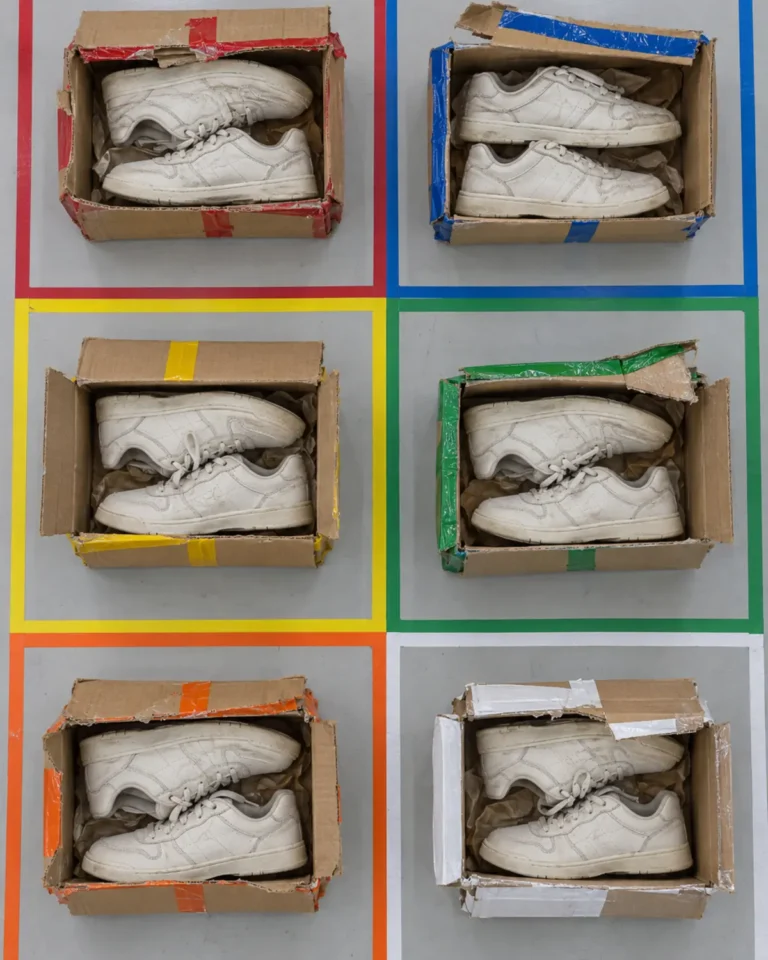
A global brand finds the same counterfeit seller network on Amazon, TikTok Shop, a standalone website, and three country-specific marketplaces. The solution seems obvious. Issue takedowns globally.
But it’s not that easy. Trademark rights are territorial, and the requirements for reporting infringements, submitting evidence, working with customs, and escalating cases vary from one jurisdiction to another. What seems like one enforcement challenge is actually six separate enforcement challenges happening at the same time.
This is the reality of global brand protection. Detection can be global, but enforcement remains territorial, and the difficult part is connecting the two.
Annual counterfeit goods sold globally
Every takedown reviewed by a person
Of customs seizures involve shipments of fewer than 10 items (OECD-EUIPO)
Costs recovered from infringers, not a flat retainer
Last updated: September 2026
By: Alex Zaika, Axencis
How big is multi-market counterfeiting?
Before getting into how enforcement works, it’s worth understanding the scope of what brands are actually dealing with.
The latest report, published in 2025 by the Organization for Economic Cooperation and Development (OECD) and the European Union Intellectual Property Office (EUIPO), estimated that global trade in counterfeit and pirated goods reached USD 467 billion in 2021, accounting for 2.3% of all global imports. For the EU alone, counterfeit imports were estimated at USD 117 billion, equivalent to 4.7% of EU imports. Those numbers suggest not just a problem, but an infrastructure problem.
What makes multi-market enforcement operationally difficult is how fragmented the actual contraband has become. Customs data from 2020-21 shows that shipments containing fewer than 10 items accounted for 79% of all customs seizures, compared to just 61% a decade earlier. Counterfeiters used to operate through large, concentrated shipments. Now they’re operating through thousands of small parcels distributed across multiple countries and fulfillment networks. A single counterfeiting operation might be split across five countries, three payment processors, and dozens of tiny shipments.
In 2024, EU authorities detained 112 million counterfeit items valued at approximately €3.8 billion. U.S. Customs and Border Protection intercepted more than 78 million counterfeit goods in fiscal 2025, with an estimated retail value exceeding $7.3 billion. Japan Customs recorded 33,019 import-suspension cases in 2024 – a record high and 4.3% above 2023. South Korea’s Ministry of Intellectual Property reported blocking approximately 480,000 counterfeit sales over the previous year through its overseas monitoring program.
These numbers tell the same story: counterfeiting is widespread, enforcement is fragmented, and the ability to respond at scale is increasingly outpaced by detection.
How does multi-market brand enforcement actually work?
Rather than thinking of enforcement as one process repeated in different countries, it’s more useful to understand it as four connected layers that need to work together.
The rights layer
Before enforcement can occur, a brand must determine which intellectual property rights apply to the relevant product or content, identify the owners of those rights, and determine where they can be enforced.
Trademark protection is territorial. For example, a US federal trademark provides protection in the United States, while an EU trademark provides protection across all 27 EU member states under a single registration. Many other countries operate a separate trademark system, such as the UK, Japan and South Korea.
The WIPO Madrid System simplifies the process of seeking trademark protection across multiple jurisdictions with a single international application. However, it does not create a single worldwide trademark. Ultimately, protection depends on the laws and decisions of each designated jurisdiction.
Copyright works differently. Unlike trademarks, copyright protection generally does not depend on obtaining a separate registration in every country. International agreements, particularly the Berne Convention, provide a framework under which works originating in one member country are protected in the other 180 member countries. Nevertheless, the scope of protection, available remedies, enforcement procedures, and certain registration requirements can vary by jurisdiction.
Patents are also territorial. A patent granted in one country does not automatically provide patent protection in another, for example, rights holders may be able to protect patents based on proof of selling into the market in the country in which the patent is protected, although successful protection of the mark is less likely than if the product infringing is being sold in the same country. Although international systems, such as the Patent Cooperation Treaty, can simplify the process of seeking protection in multiple countries, they do not result in a single worldwide patent. Ultimately, brands must secure enforceable patent rights in the relevant jurisdictions.
This distinction matters operationally. For instance, a single EU trademark registration can provide trademark protection in Germany and France because they are both EU member states. However, the UK is no longer covered by new EU trademark registrations, so protection there generally requires separate UK rights. Expanding into markets such as Japan or South Korea introduces additional jurisdiction-specific rights and enforcement considerations.
The takeaway for enforcement is straightforward: before taking action, determine which intellectual property (IP) right is being infringed upon, who owns it, and whether that right provides a basis for enforcement in the relevant market. A trademark, copyright, or patent that supports action in one jurisdiction may not provide the same basis for enforcement in another.
The online-platform layer
Once an infringement is detected, the rights holder uses the marketplace’s own takedown or brand-protection process. However, this raises questions regarding the complexity of territorial boundaries.
Amazon Brand Registry in the US operates differently from Amazon’s process in Europe. eBay operates its VeRO program for rights-owner reports, but the information and legal basis required for a report depend on the type of IP right asserted and the market in which the allegedly infringing listing appears. Alibaba maintains separate IPP systems for international versus China-facing marketplaces. Meta’s IP Reporting Center works differently from its Brand Rights Protection tools.
That diversity matters because “we own the trademark” is not sufficient to complete a takedown. The marketplace also needs correct registration evidence, authorization documents, product URLs or identifiers, an explanation of why the listing infringes, and additional supporting documentation depending on the claim type and platform’s specific requirements.
The UK Intellectual Property Office’s e-commerce enforcement guidance documents differences in how major platforms handle rights-holder onboarding and infringement reports. For brands operating internationally, accurate marketplace domain location identification is therefore an important part of assessing an infringement. A listing found on Amazon.de, for example, should not automatically be treated as equivalent to one found on Amazon.com simply because both appear on Amazon. The relevant marketplace, applicable IP rights, and enforcement requirements should be assessed before action is taken.
The border layer
Marketplace takedowns remove listings. Customs mechanisms remove physical goods. These are separate systems.
A US trademark owner can record qualifying rights with US Customs and Border Protection for border enforcement. A UK right holder uses an Application for Action. An EU right holder uses the customs AFA (Application for Action) or eAFA (electronic Application for Action) framework. South Korea manages customs IPR registration through TIPA (Trade-Related IPR Protection Association). Japan provides an Application for Suspension mechanism.
These systems don’t coordinate automatically. Recording a trademark with US Customs doesn’t simultaneously protect it at EU borders or Japanese ports. Each jurisdiction requires its own setup and maintenance.
This is why global enforcement requires more than marketplace vigilance. A brand that stops at online takedowns may miss physical shipments of the same counterfeits entering ports in other countries.
The escalation layer
When takedowns and customs action aren’t enough, persistent networks require investigation, legal action, or law enforcement referral. But the legal path changes by jurisdiction.
In the US, a brand might pursue a civil lawsuit for trademark infringement. In the EU, national courts handle enforcement with harmonized rules but still execute remedy within their own legal systems. In Japan and South Korea, the procedures are different again. Some jurisdictions allow criminal referrals for large-scale counterfeiting, while others focus on civil remedies.
This is also where prioritization becomes important. Not every infringement merits the most expensive available legal process. OECD research specifically highlights limited enforcement resources as a reason brands need to distinguish between routine platform enforcement and cases serious enough for local legal escalation.
How does IP enforcement differ across key markets?
Understanding why enforcement strategy cannot simply be copied from one country to another requires knowing where the practical differences actually matter.
United States: US trademark law plays an unusually important role. Trademark rights can arise through use alone, creating geographically limited common-law rights. But federal registration provides substantially stronger nationwide rights and is strategically much more important for scaled enforcement such as litigation. The United States Patent and Trademark Office (USPTO) issued a statement clarifying that registration does not imply government monitoring of infringement for the owner. It is incumbent upon the right holder to assume responsibility in this regard. For marketplace and customs enforcement, federal registration is far more valuable than relying on use-based rights. Brands with US federal registrations can also record those rights with U.S. Customs and Border Protection (CBP) through the eRecordation program for automated border protection, which intercepted more than 78 million counterfeit goods in fiscal 2025 with an estimated retail value exceeding $7.3 billion.
United Kingdom: Post-Brexit, the UK operates separately from the EU. Registered UK trademarks provide statutory rights; unregistered signs do not have the same trademark-infringement remedy. UK customs protection must be requested through a separate Application for Action system. A global brand covering London, Paris, and Berlin cannot treat customs enforcement as a single European process anymore. The UK now requires its own customs strategy, separate filings, and distinct platform approaches. This duplication affects any brand that operated smoothly across EU borders before 2020. According to the UK’s first post-Brexit customs-IP enforcement report published in 2025, over 1 million suspected counterfeit articles were seized in 2023, with 89% confirmed counterfeit and an estimated genuine retail value above £200 million.
EU member states: A brand seeking trademark protection across the EU can apply for an EU trademark (EUTM) through the European Union Intellectual Property Office (EUIPO). An EUTM provides protection in all 27 EU member states. This differs from registering a trademark nationally in an individual member state. For example, a trademark registered in Germany does not automatically provide protection in France or elsewhere in the EU.
EU member states also participate in the EU Customs Application for Action (AFA) framework. Electronic applications have been submitted through the IP Enforcement Portal since October 2024.
For brands operating across multiple EU markets, an EUTM can simplify the rights process by providing a single registration that covers the countries in which they plan to operate. However, shared EU-level trademark protection does not make every aspect of enforcement identical across those markets. National courts and authorities are still involved in some aspects of enforcement, and the procedures and remedies can differ between Member States. For example, a dispute pursued in Germany may require a different procedural approach than one pursued in France, making local expertise relevant even when the underlying right is the same EUTM.
South Korea: South Korea operates a registration-centered trademark system with a first-to-file principle. A company cannot assume US-style use-based rights can simply transplant into South Korea. First filer wins, regardless of who actually used the mark first. Customs protection also requires separate setup through Trade-Related IPR Protection Association (TIPA), with online registration available. The Ministry’s emphasis on registered protection means filing early in South Korea isn’t optional – brands that delay Korean filing risk losing priority to counterfeiters or opportunistic squatters. South Korea’s Ministry of Intellectual Property reported in June 2026 that its overseas counterfeit-monitoring program had expanded to 115 countries and blocked approximately 480,000 counterfeit sales over the previous year, showing that Korea is an increasingly important enforcement market.
Japan: Japan also operates a first-to-file system where the first filer has priority. Japan Customs offers an Application for Suspension process where goods determined to infringe can be confiscated and destroyed. Japan’s record 33,019 import-suspension cases in 2024 shows that border enforcement should be part of the strategy, not an afterthought. Additionally, 80.6% of Japan’s import-suspension cases originated from China, with clothing (31.1%), bags (19.3%), and footwear (11.2%) as the largest categories – showing that Japan’s enforcement aligns directly with luxury household brands.
The practical takeaway from this analysis is that while basic trademark rights are internationally recognized, the territorial scope, the importance of registration versus use, customs procedures, and enforcement mechanisms differ enough that global enforcement must be used with knowledge of local systems. A strategy that is successful in Germany may not be applicable in South Korea. A rights portfolio that is efficient in the EU will require duplication post-Brexit to be protected in the UK.
How do you build a global enforcement intelligence system?
The difference between reactive enforcement and strategic enforcement comes down to how brands use intelligence gathered in one market to inform enforcement efforts in others.
When a brand detects counterfeits on Amazon US, that intelligence should trigger a search on Amazon EU, eBay, Alibaba, and TikTok Shop to see if the same seller or network is active elsewhere. When customs in one country seizes a shipment, that information informs monitoring in other countries about sourcing patterns and logistics routes. When a seller relists after a takedown in one market, this suggests that the entire network might rely on rapid re-listing rather than genuine inventory, which changes the escalation strategy.
Global enforcement works best when each market’s enforcement actions feed intelligence back into the system. A takedown in Japan isn’t just a takedown in Japan – it’s data about seller behavior, evasion tactics, and network structure that makes enforcement in Germany and South Korea more effective.
Brands managing this alone typically miss these patterns. They handle enforcement country by country, marketplace by marketplace, treating each case as isolated. Coordinated enforcement across all six markets simultaneously creates visibility that no single-market team can achieve alone.
Which marketplaces are hardest to enforce on?
There’s no universal ranking of the hardest marketplaces for IP enforcement. Difficulty changes based on the brand, type of IP right, country where that right exists, evidence available, and seller behavior.
But certain patterns emerge. Friction tends to be highest where counterfeit volumes are high, seller identities and listings change rapidly, evidence requirements are demanding, local rights are required, or the platform’s complaint and repeat-infringer processes make sustained enforcement difficult.
Amazon Brand Registry provides registered brands with search and reporting tools, including image, keyword, and ASIN-based identification. Over 350,000 brands were enrolled in Brand Registry according to the UK IPO’s April 2026 guidance, with registered brands reporting 99% fewer suspected infringements than before joining the program. That’s significant efficiency.
Alibaba maintains separate systems for international and China-facing marketplaces, and enforcement differs substantially between them. TikTok Shop’s livestream model creates speed-of-enforcement challenges covered extensively in our social commerce counterfeiting article. Smaller or regional platforms often lack formalized IP workflows entirely, requiring custom cease-and-desist letters or direct contact with platform management.
Enforcement difficulty isn’t about the marketplace itself so much as the combination of volume, seller sophistication, and how well the platform’s process aligns with your enforcement capability.
Why does single-provider coordination matter more than being “global”?
Brands sometimes assume a single provider with offices in six countries is inherently superior to coordinating multiple regional specialists. The research doesn’t support that universally.
What the research does support is the value of coordination and information sharing. OECD specifically identifies cross-border coordination, information sharing between authorities, and cooperation between right holders and intermediaries as important responses to counterfeiting.
That coordination happens through a unified enforcement layer that understands the different processes, maintains registrations across territories, submits to different platforms using the correct evidence for each, and feeds intelligence back into global monitoring so that teams learn which sellers operate across markets, which countries they source from, and which enforcement methods work best for each type of network.
A brand protecting itself in six markets requires six different rights portfolios, six different platform submission processes, and six different customs strategies. These strategies are not inherently aligned. The primary benefit of this system is its capacity to translate and coordinate across all six languages, both in theory and in practice.
Key takeaways
- Detection can be global, but enforcement is territorial. Trademark and patent rights stop at the border of the jurisdiction that granted them.
- Enforcement runs in four connected layers. Rights, online platforms, borders, and escalation, each with its own rules in each market.
- Counterfeits now move in small parcels. 79% of customs seizures involve shipments of fewer than 10 items, spread across countries and fulfillment networks.
- Customs systems don’t talk to each other. A CBP recordation does nothing at EU, UK, Japanese, or Korean borders.
- Coordination is the advantage. Intelligence from a takedown in one market should shape enforcement in every other.
Frequently asked questions
How do you enforce brand protection across multiple countries?
Enforcement happens in connected layers. You start by confirming which rights are registered in each country where you operate, then use each marketplace’s platform-specific takedown process with the evidence they require. Record your rights with customs agencies for border protection (though this involves separate processes in each country), and escalate persistent networks to local legal enforcement when the situation warrants it. The coordination between these layers matters more than perfecting any single layer. Most brands fail at global enforcement not because they don’t understand what to do in one country, but because they can’t coordinate across all of them simultaneously.
What are the biggest challenges of global brand enforcement?
The fundamental problem is that territorial rights mean no truly global trademark exists. Platform workflows vary by marketplace and region, customs procedures differ by country, and evidence standards change depending on which jurisdiction you’re in. Counterfeit operations now exploit this fragmentation by using small shipments (79% are under 10 items) distributed across multiple countries. Managing six separate systems simultaneously, each with different timelines and evidence requirements, creates operational complexity that single-market enforcement teams simply cannot handle.
How do IP laws differ across major markets?
The basics are internationally recognizable, but the details differ significantly enough to break any one-size-fits-all strategy. The US emphasizes use-based trademark rights while most other countries operate on first-to-file registration. EU countries benefit from a single EUTM but must treat the UK separately post-Brexit. Japan and South Korea have their own trademark and customs enforcement procedures. Brands cannot copy a US strategy into Japan and expect the same results.
Which marketplaces are hardest to enforce on?
There is no universal ranking because difficulty depends entirely on seller volume, how quickly listings change, evidence requirements, local rights availability, and the platform’s complaint process. Amazon Brand Registry offers strong tools for registered brands, while TikTok Shop’s livestream model creates challenges in terms of the speed of response that traditional takedown processes are unable to meet.
What is the competitive advantage of coordination?
In order to prevail in the face of multi-market counterfeiting, brands must adopt a unified approach, recognizing that each country should be treated as a distinct enforcement issue. They are responsible for coordinating efforts across various markets, sharing intelligence, and adjusting enforcement strategies based on the location of counterfeiting and the most effective methods in different regions.
A coordinated global enforcement program detects patterns that single-market teams miss. A counterfeit seller operating on Amazon US, Alibaba International, and TikTok Shop EU looks like three separate problems without coordination. With coordination, it’s one network operating across markets, and that intelligence changes enforcement strategy entirely.
Next steps
If you’re protecting a brand globally, start by auditing your rights portfolio. Do you have registered trademarks in every country where you operate? Are you enrolled in Brand Registry programs where you sell? Have you recorded your rights with customs in key markets?
For multi-market counterfeiting operations, legal enforcement may be necessary. Our article on legal enforcement and Schedule A proceedings covers how to pursue organized networks.
Sources
- OECD-EUIPO – Mapping Global Trade in Fakes (2025)
- European Commission – EU enforcement of intellectual property rights at the border (2024 results)
- U.S. Customs and Border Protection – Intellectual Property Rights seizure statistics (FY2025)
- Japan Customs – import-suspension statistics (2024)
- South Korea Ministry of Intellectual Property – overseas counterfeit monitoring (June 2026)
- UK Intellectual Property Office – e-commerce enforcement guidance (April 2026) and IP crime and enforcement report (2025)
- WIPO – Madrid System, Berne Convention, Patent Cooperation Treaty
- USPTO – trademark registration guidance
Not Sure Where Your Global Enforcement Strategy Stands?
One counterfeit network across six markets is one problem, not six. Axencis coordinates takedowns and legal escalation across platforms and jurisdictions so intelligence from one market sharpens enforcement in the rest.
About the author
Alex Zaika writes on brand protection, counterfeit enforcement, and marketplace risk for Axencis, a brand protection and IP enforcement company. For questions about enforcement strategy, get in touch.